

For beginners, investing in crypto should start with understanding the risks, choosing a secure way to buy and store digital assets, and investing only an amount they can afford to lose. Crypto can offer opportunities for diversification and long-term growth, but prices can be highly volatile and losses can be significant.
If you are new to crypto, there is no need to rush into buying an asset simply because its price is rising or because someone online says it is the “next big thing”. A sensible approach is to learn the basics, define your goals, understand the risks and build good security habits before committing meaningful amounts of money.
What Does Investing in Crypto Actually Mean?
Crypto investing generally involves buying digital assets with the expectation that they may increase in value over time.
Some people invest in established cryptocurrencies such as Bitcoin or Ether, while others explore smaller projects, staking or other areas of the digital-asset market. Each approach carries different risks, and past performance does not guarantee future results.
It is also important to distinguish investing from trading. Investing generally focuses on a longer time horizon, while trading involves more frequent buying and selling in an attempt to benefit from shorter-term price movements. For beginners, frequent trading can introduce additional risks, including emotional decision-making and transaction costs.
Start by Understanding the Risks
Before buying any cryptocurrency, understand what could go wrong.
Crypto markets can experience substantial price movements over relatively short periods. Individual tokens can also face additional risks related to liquidity, technology, regulation, security, project development or loss of market interest.
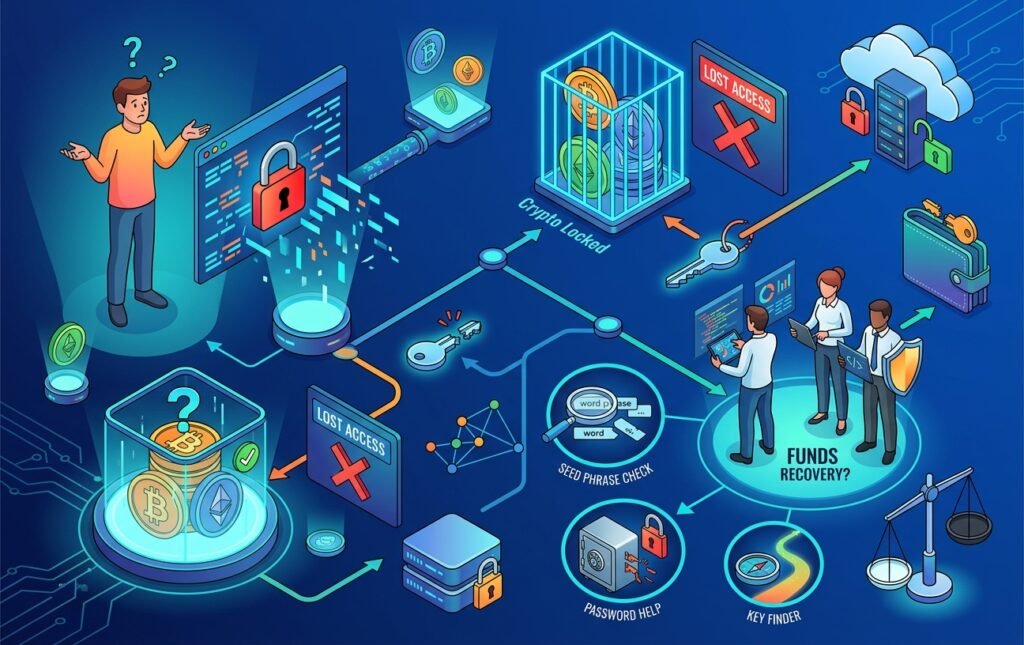
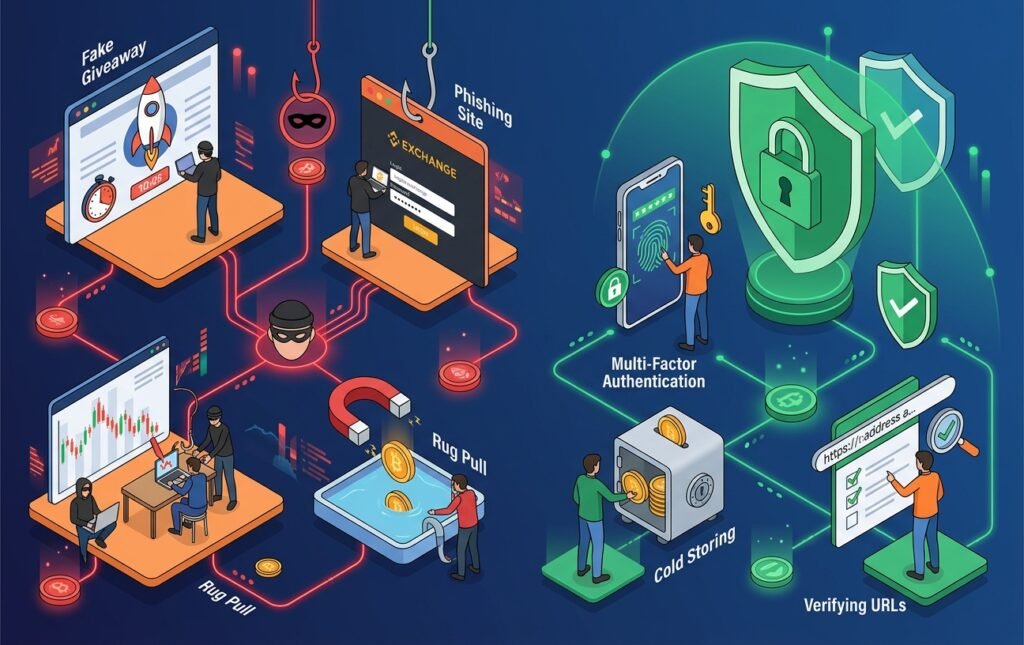
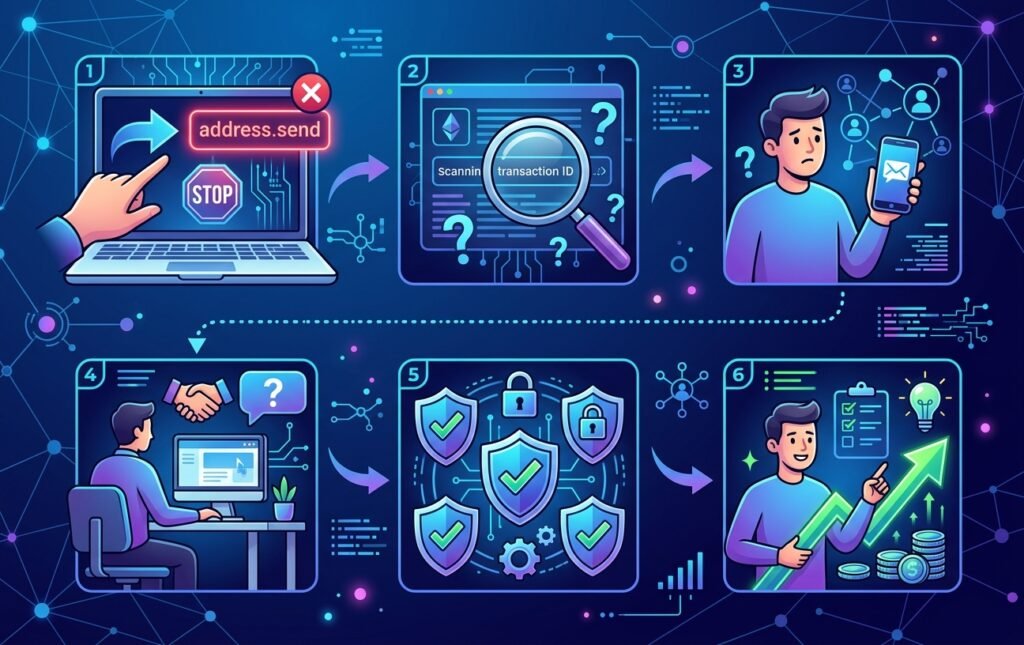
There is also the possibility of losing access to assets through security mistakes. Sending crypto to the wrong address, using an incompatible network or falling victim to phishing can result in losses that may be difficult or impossible to reverse.
A beginner should therefore consider three questions before investing:
- How much money could I afford to lose without affecting essential expenses?
- How long am I prepared to hold the investment?
- Would a significant fall in value cause me to make a decision I might later regret?
If the answer to the first question is “not much”, that should influence how much you invest.
Learn the Basics Before Buying
You do not need to become a blockchain developer, but you should understand the concepts that affect your money.
At a minimum, learn what these terms mean:
Blockchain: A distributed digital ledger used to record transactions.
Cryptocurrency: A digital asset that uses cryptographic technology and, typically, a blockchain or similar network.
Wallet: A tool that allows you to manage the credentials needed to access and transact with crypto assets.
Private key: A secret credential that can provide control over assets associated with a blockchain address. It should never be shared.
Seed phrase: A set of words used by some wallets to restore access. Anyone who obtains it may be able to gain control of the associated assets.
Exchange: A platform where users can buy, sell or trade digital assets.
Understanding these fundamentals can make it easier to spot misleading claims and avoid costly mistakes.
Decide Why You Want to Invest
Your reason for investing should influence your approach.
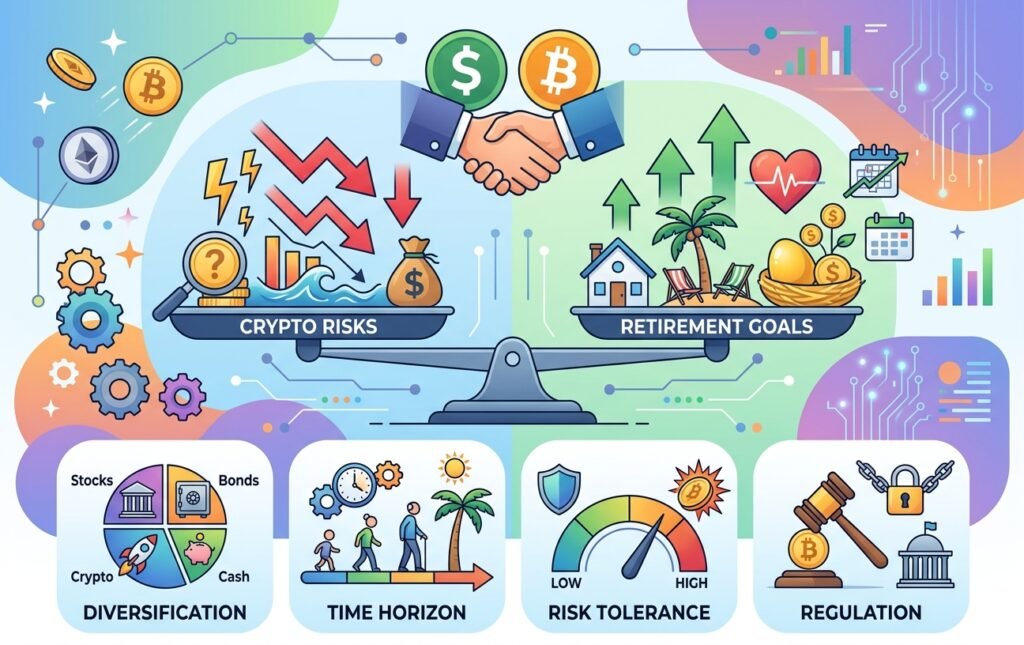
Someone interested in learning about digital assets may take a very different approach from someone considering crypto as one small part of a long-term portfolio.
Think about your:
- Investment goal
- Time horizon
- Risk tolerance
- Existing savings and investments
- Need for access to the money
- Comfort with potentially large price movements
Crypto should be considered in the context of your broader financial situation rather than as a standalone opportunity.
Only Invest What You Can Afford to Lose
One of the simplest principles for a beginner is also one of the most important: do not invest money you need for essential expenses or near-term financial commitments.
There is no universally correct amount to invest in crypto. A suitable amount depends on an individual’s circumstances, financial position and tolerance for risk.
For some investors, crypto may represent only a small portion of a diversified portfolio. Others may decide that the risks are not appropriate for them at all.
Avoid borrowing money to invest simply because you expect prices to rise. Leverage can magnify losses as well as gains and can make an already volatile market considerably harder to manage.
Choose Assets Carefully
The crypto market contains thousands of digital assets, but availability does not make an asset a good investment.
Before considering a cryptocurrency, research questions such as:
- What problem is the project trying to solve?
- How does the network or asset work?
- Who develops and maintains it?
- How liquid is the asset?
- What are its token economics?
- What risks are associated with the technology?
- How widely is it used?
- What information is available about the project?
Be particularly cautious about claims that a token is guaranteed to rise, offers effortless profits or represents a “once-in-a-lifetime” opportunity.
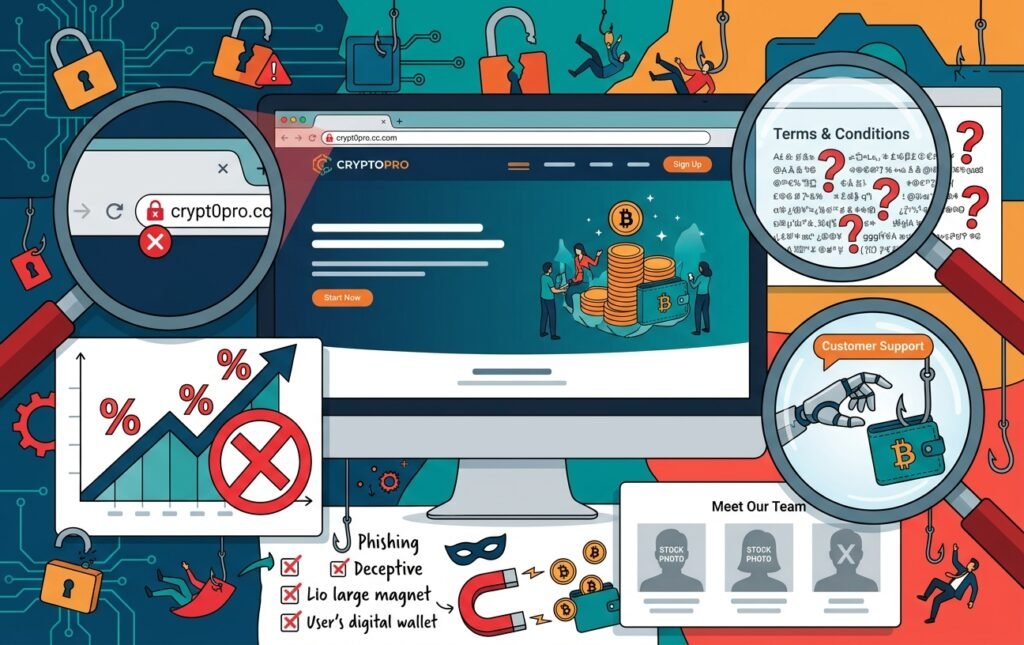
A professional-looking website or a large social-media following is not proof that a crypto project is legitimate or suitable as an investment.
Choose Where to Buy Crypto Carefully
If you decide to invest, consider the platform through which you purchase your assets.
Look at factors such as:
- Security practices
- Reputation and track record
- Fees and spreads
- Available assets
- Withdrawal options
- Account protection
- Regulatory status where relevant
- Customer-support processes
Do not choose a platform solely because it advertises the lowest fees or promises unusually high returns.
It is also worth understanding exactly what happens to your assets after purchase. Depending on the service, you may have different levels of control over the underlying wallet and private keys.
Understand Crypto Wallets and Self-Custody
Buying crypto is only part of the process. You also need to think about how it will be stored.
A crypto wallet does not physically contain coins in the way a traditional wallet contains cash. Instead, it provides tools for managing the credentials used to access blockchain-based assets.
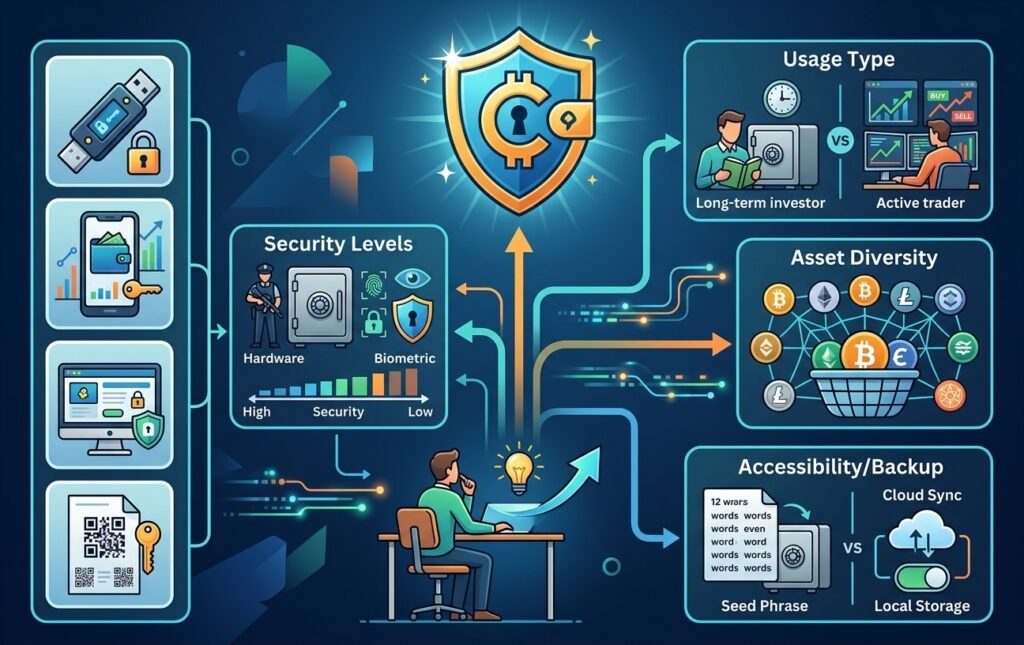
Different storage approaches can involve different trade-offs between convenience and control.
With a custodial service, another company generally manages the private keys on your behalf. With self-custody, you take greater responsibility for protecting your own credentials.
Neither approach eliminates risk. Self-custody can provide greater control, but losing important credentials or exposing them to someone else can create serious problems.
Treat Your Seed Phrase Like Sensitive Information
If your wallet uses a seed phrase, protect it carefully.
Never share it with someone claiming to be from customer support. Legitimate support should not need your secret recovery credentials simply to help you with an account or transaction.
Be cautious of websites, messages and social-media accounts asking you to “verify” your wallet by entering a seed phrase.
You should also be skeptical of anyone who promises to recover crypto in exchange for an upfront payment or asks for sensitive wallet information. Recovery scams frequently target people who have already suffered a loss.
Make Security Part of Your Investment Strategy
Security is not an optional extra for crypto investors.
Good habits include:
- Use strong, unique passwords.
- Enable available multi-factor authentication.
- Keep devices and software updated.
- Check website addresses carefully before signing in.
- Avoid clicking unexpected links in messages or emails.
- Double-check wallet addresses and networks before confirming transactions.
- Keep recovery information private and secure.
- Be cautious when someone creates urgency around a transaction.
Consider making a small test transaction when you are unfamiliar with a new address or network. A short pause to verify the details can be much less costly than trying to resolve a mistaken transfer later.
Avoid Common Beginner Mistakes
New investors can be particularly vulnerable to emotional decisions.
Some common mistakes include:
Buying Because of FOMO
Fear of missing out can encourage people to buy after a sharp price increase without understanding what they are purchasing.
Chasing Quick Profits
Crypto can produce dramatic gains, but that does not mean those gains are predictable or repeatable.
Putting Everything Into One Asset
Concentration can increase the impact of a price decline. Diversification does not remove risk, but it can reduce dependence on a single investment.
Trading Too Frequently
Frequent trading can make it harder to maintain a consistent strategy and may increase costs and the opportunity for mistakes.
Following Influencers Blindly
Online personalities may have different financial circumstances, incentives and risk tolerances from yours. Treat investment claims as something to investigate, not instructions to follow.
Ignoring Taxes and Record-Keeping
Crypto transactions can have tax implications depending on where you live. Keep records of purchases, sales, transfers and other relevant transactions, and check the rules that apply in your jurisdiction.
Should Beginners Start With Bitcoin or Other Cryptocurrencies?
There is no universal answer.
Bitcoin is the largest and most established cryptocurrency by market value, while other assets can have different technologies, use cases, market structures and risk profiles.
The important point for a beginner is not to choose an asset simply because somebody calls it “the next Bitcoin”. Instead, understand what you are buying and why you believe it belongs in your investment strategy.
A smaller or newer token may carry substantially different risks from a more established asset, including lower liquidity and greater sensitivity to market sentiment.
What About Crypto Staking?
Staking can allow users to earn rewards by participating in certain proof-of-stake networks or through services that provide staking-related functionality.
However, staking should not automatically be treated as “free income”. Risks can include asset-price declines, lock-up or withdrawal restrictions, validator or platform risks, and changes to reward rates.
If you are considering staking, understand both how the underlying network works and what happens to your assets while they are being staked.
Consider Starting Small
A beginner does not need to make a large investment to learn how crypto works.
Starting with an amount that is genuinely manageable can allow you to become familiar with:
- Buying and selling
- Wallets
- Transfers
- Network fees
- Transaction confirmations
- Security procedures
- Record-keeping
The goal is not to maximise your first investment. It is to develop an understanding of how the system works while keeping the financial consequences of mistakes limited.
Build a Simple Investment Plan
Rather than making decisions based on daily price movements, write down the principles you intend to follow.
For example, you might decide:
- How much you are prepared to allocate to crypto.
- Which types of assets you are willing to consider.
- How long you intend to hold them.
- How you will store them securely.
- How often you will review your position.
- What circumstances would cause you to change your approach.
A written plan can make it easier to distinguish a deliberate decision from an emotional reaction to market volatility.
What Should a Beginner Do First?
If you are completely new to crypto, a sensible starting sequence is:
First, learn. Understand wallets, blockchain transactions, private keys, volatility and common scams.
Second, assess your finances. Make sure investing would not interfere with essential spending, emergency savings or other financial priorities.
Third, research. Investigate the assets and platforms you are considering rather than relying on social-media recommendations.
Fourth, secure your account and wallet. Set up strong authentication and understand how recovery credentials work before transferring meaningful amounts.
Fifth, start cautiously. Use an amount you can afford to lose and take time to become comfortable with the process.
Finally, review rather than react. Crypto markets can move quickly. A long-term investment approach requires the ability to tolerate uncertainty without making every decision based on the latest price movement.
Where Does a Crypto Wallet Fit In?
A crypto wallet can become an important part of managing digital assets once you move beyond simply researching the market.
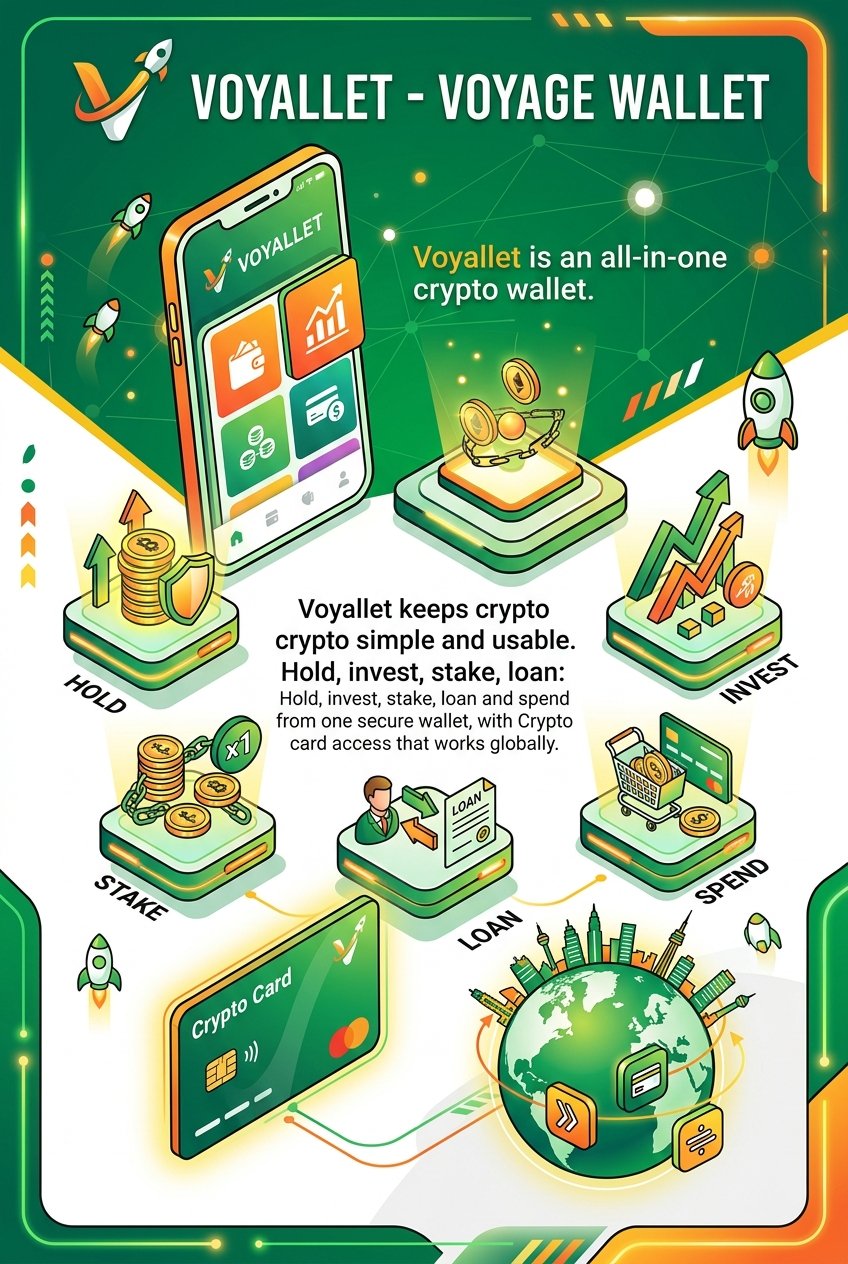
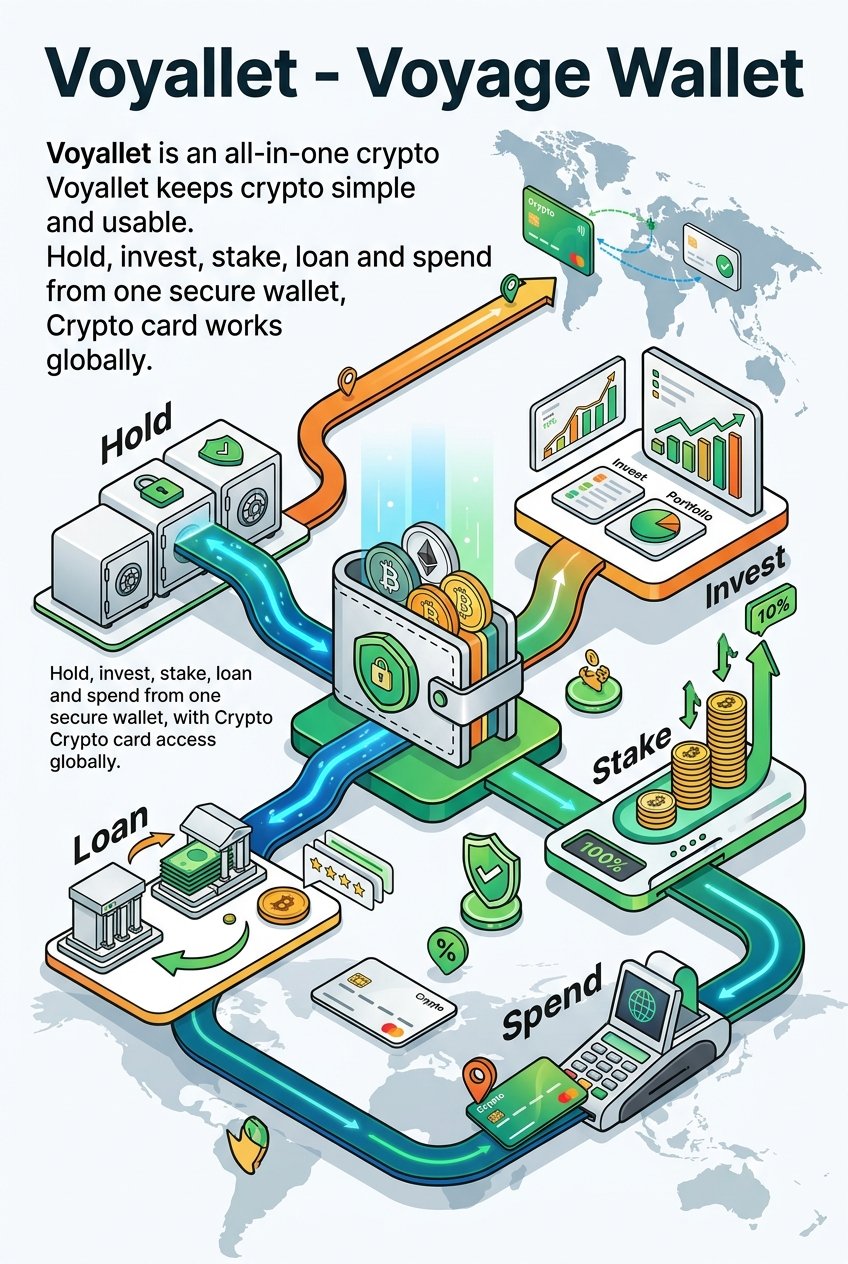
Voyallet takes an all-in-one approach to crypto management, bringing functions such as holding, investing, staking and spending together within one wallet. For users who prefer to manage different aspects of their digital assets through a single interface, that approach may be convenient.
However, convenience should not replace due diligence. Beginners should still understand the security features, supported assets, fees, transaction processes and responsibilities associated with any wallet they choose.
The broader lesson is that choosing a wallet is only one part of investing responsibly. Understanding the assets themselves, protecting access and maintaining a realistic view of risk are equally important.
The Bottom Line
For a beginner, starting to invest in crypto is less about finding the perfect coin and more about building a sensible process.
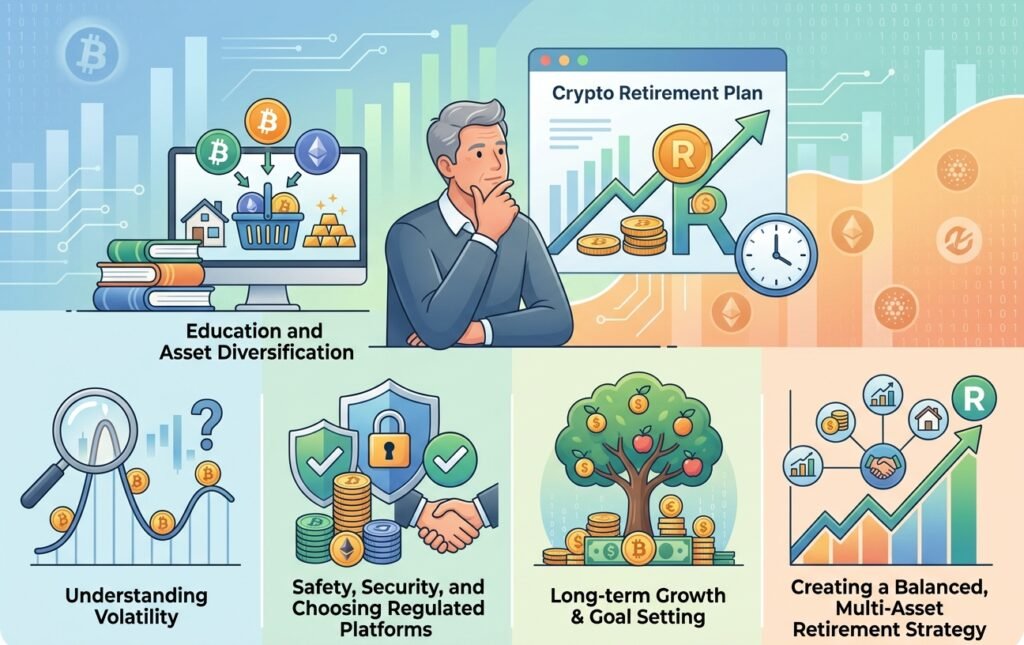
Learn how digital assets work, understand the possibility of significant losses, invest only what you can afford to lose, research assets carefully and take wallet security seriously. Avoid pressure to make quick decisions, and remember that no investment strategy can guarantee a profit.
Crypto may have a place in some investors’ portfolios, but it is not suitable for everyone. The most useful first step is not necessarily buying your first cryptocurrency—it is making sure you understand what you are buying, why you are buying it and what could happen if things do not go as planned.
Risk Warning: Virtual asset markets can be highly volatile, and the value of digital assets can rise or fall. You may receive less than the amount you invested and could potentially lose some or all of your investment. The information in this article is provided for general educational and informational purposes and does not constitute financial advice, investment advice or an endorsement of any asset, product or strategy. You are solely responsible for your investment decisions and should consider your own circumstances and risk tolerance before taking action. Voyallet is not responsible for losses that may result from investment decisions made based on this information.