

How much crypto you should own depends less on a universal percentage and more on your financial situation, risk tolerance, investment horizon and ability to withstand losses. For some investors, digital assets may have a limited role in a diversified portfolio; for others, the risks may make crypto unsuitable altogether.
That makes crypto allocation an important question to consider before investing. Rather than looking for a single “right” percentage, it can be more useful to assess how much risk you can realistically take and what role crypto would play alongside your other financial goals.
Why There Is No Universal Crypto Allocation
Crypto assets can behave differently from traditional investments, but they can also experience substantial price volatility. A portfolio allocation that feels manageable to one person could be excessive for another.
Someone with a long investment horizon, stable finances and a diversified portfolio may have a different capacity for risk than someone who needs their savings in the near future.
The right question is therefore not simply:
“What percentage of my portfolio should be crypto?”
It is:
“What level of crypto exposure could I tolerate without putting my wider financial plans at risk?”
That distinction matters because even a relatively small allocation can experience significant swings in value.
Questions to Ask Before Investing in Crypto
1. What Are Your Financial Priorities?
Before deciding how much crypto to buy, consider what you are already saving for.
Your priorities might include:
- Building an emergency fund
- Paying down expensive debt
- Saving for a home
- Funding education
- Building retirement savings
- Covering near-term expenses
If investing in crypto would interfere with these priorities, increasing your crypto allocation may not be appropriate.
Investments should generally fit around your broader financial plan rather than replace essential financial foundations.
2. How Much Loss Could You Afford?
Crypto investing involves the possibility of losing a substantial portion of the money invested.
Consider how you would react if the value of your crypto holdings fell sharply. Would you still be able to pay your bills and meet your financial commitments? Would you be forced to sell because you needed the money?
If a significant decline would create financial pressure, your exposure may be too high for your circumstances.
This is one reason position size matters. The same market decline can have very different consequences depending on how much of a person’s overall wealth is invested in crypto.
3. What Is Your Investment Time Horizon?
Your time horizon can influence how much investment risk you are able to accept.
Money needed in the short term generally has less room for substantial market fluctuations than money being invested for a longer-term goal.
Before investing, ask:
- When might I need this money?
- Could I leave the investment untouched through a prolonged market downturn?
- Would a major price decline change my plans?
- Am I investing for a specific goal or simply seeking long-term exposure?
There is no guarantee that holding crypto for a longer period will produce a profit. A longer horizon can provide more time to recover from some market movements, but it does not eliminate investment risk.
How Does Crypto Fit Into a Diversified Portfolio?
Diversification is about avoiding excessive reliance on a single investment, asset or source of risk.
Crypto may represent only one part of a broader portfolio that could include other investments and cash or savings, depending on an individual’s circumstances.
Rather than deciding on a crypto allocation in isolation, consider your total financial exposure.
For example, someone may believe they have a small crypto position but have additional exposure through several digital assets, crypto-related companies or other investments that respond to similar market conditions.
Looking at the portfolio as a whole can provide a more realistic picture of risk.
Should Beginners Start With a Small Amount?
For someone who is new to crypto, starting with an amount they can genuinely afford to lose may make it easier to learn how wallets, transactions, exchanges and market volatility work without putting a large proportion of their finances at risk.
However, “small” is relative. A percentage that appears modest in general terms may still be too large for a particular person’s financial circumstances.
The objective should not be to find the smallest amount that might generate a large return. It should be to understand the risks before committing money.
What Type of Crypto Are You Buying?
“Crypto” describes a broad range of digital assets rather than a single investment.
Different assets can have different:
- Uses
- Market sizes
- Liquidity
- Technology
- Token economics
- Development activity
- Risk profiles
Holding several cryptocurrencies does not necessarily create meaningful diversification if those assets are exposed to similar market conditions.
Before investing, understand what you are buying and why you believe it belongs in your portfolio.
Can You Handle Crypto Volatility?
Price volatility is one of the defining risks of the crypto market.
A person might be comfortable with a small allocation when prices are rising but find the same allocation difficult to hold during a significant downturn.
It can therefore help to consider your response before investing rather than during a period of market stress.
Ask yourself:
- How would I react to a large temporary loss?
- Would I be tempted to sell purely because prices were falling?
- Could I continue following my broader financial plan?
- Am I relying on crypto gains to achieve an essential financial goal?
If your financial plan depends on crypto performing well, the risk may be greater than it first appears.
What About Regular Investing?
Some investors choose to invest smaller amounts at regular intervals rather than making a single large purchase. This approach can reduce the importance of choosing one particular entry point, but it does not remove the risks of investing in crypto.
Regular investing also does not guarantee a profit or protect against losses.
The more important consideration is whether the overall amount being invested remains appropriate for your circumstances.
When Should You Reconsider Your Crypto Allocation?
Your appropriate allocation can change as your circumstances change.
For example, you might reconsider your exposure after:
- A significant change in income
- Taking on substantial debt
- A major change in household expenses
- Approaching retirement
- A change in your investment objectives
- A significant increase in the value of your crypto holdings
- A change in your ability to tolerate investment losses
Rebalancing can also be worth considering when one part of a portfolio grows disproportionately and begins to create more risk than intended.
Don’t Forget Security
Deciding how much crypto to own is only part of the process. How you store and protect it also matters.
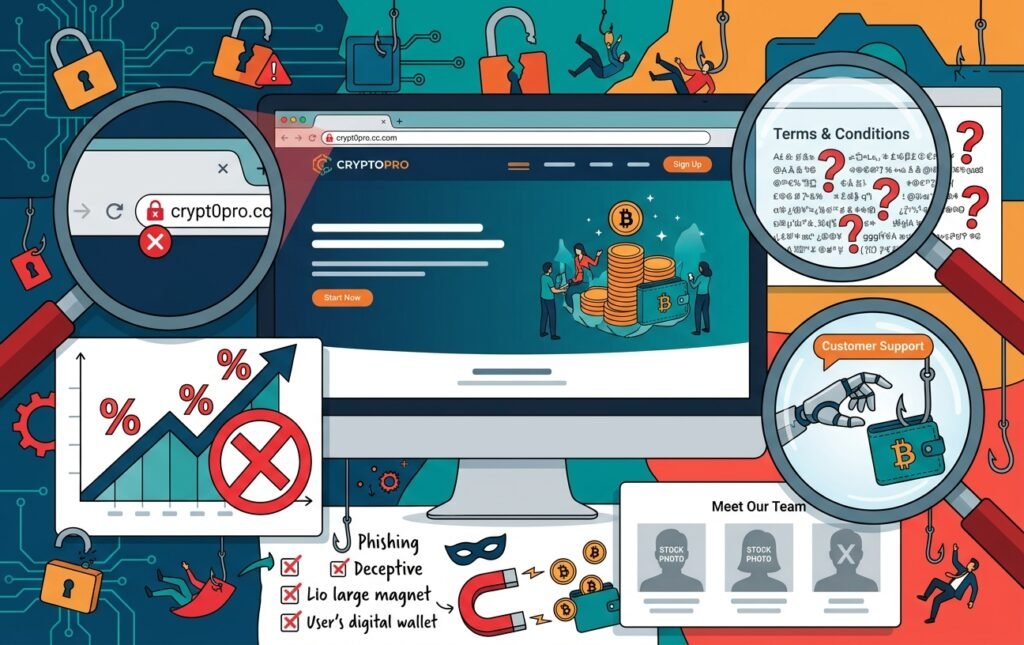
Crypto transactions can be difficult or impossible to reverse, depending on the circumstances. Losing access credentials, sending assets to an incorrect address or falling for a phishing attempt can create significant problems.
Before increasing your holdings, understand:
- How your wallet works
- How private keys or recovery credentials are protected
- How to verify transaction details
- How to recognise phishing attempts
- What security measures are available
- What happens if you lose access to your account or wallet
The larger your holdings become, the more important it is to take security seriously.
Avoid Making Crypto Your Entire Financial Plan
Crypto can be an area of interest for investors, but concentrating too much of your financial resources in one volatile asset class can create substantial risk.
It is particularly important to avoid assuming that past price increases will continue indefinitely.
A strong financial plan should account for different possible outcomes, including the possibility that an investment performs poorly for an extended period.
Crypto should therefore be considered in the context of your wider finances rather than viewed as a replacement for saving, diversification or long-term financial planning.
A Practical Framework for Deciding How Much Crypto to Own
Instead of starting with a target percentage, work through these questions:
- Have I covered my essential financial needs?
- How much money could I afford to lose without affecting those needs?
- When might I need the money I’m investing?
- How diversified is the rest of my portfolio?
- Do I understand the assets I’m considering?
- Can I cope with substantial price volatility?
- Do I have a plan for storing and securing my crypto?
- Would I still be comfortable with this allocation after a major market decline?
The answers can help you determine whether your planned exposure is consistent with your circumstances.
There is no allocation that is automatically right for every investor. A sensible approach is to decide how much risk you can realistically accept, understand the assets you are considering and review your position as your financial circumstances change.
Where Does Voyallet Fit In?
For people who decide that crypto has a place in their wider financial strategy, managing digital assets involves more than simply buying them.
Depending on the services available to them, users may also need to consider storage, security, investing, staking and spending.
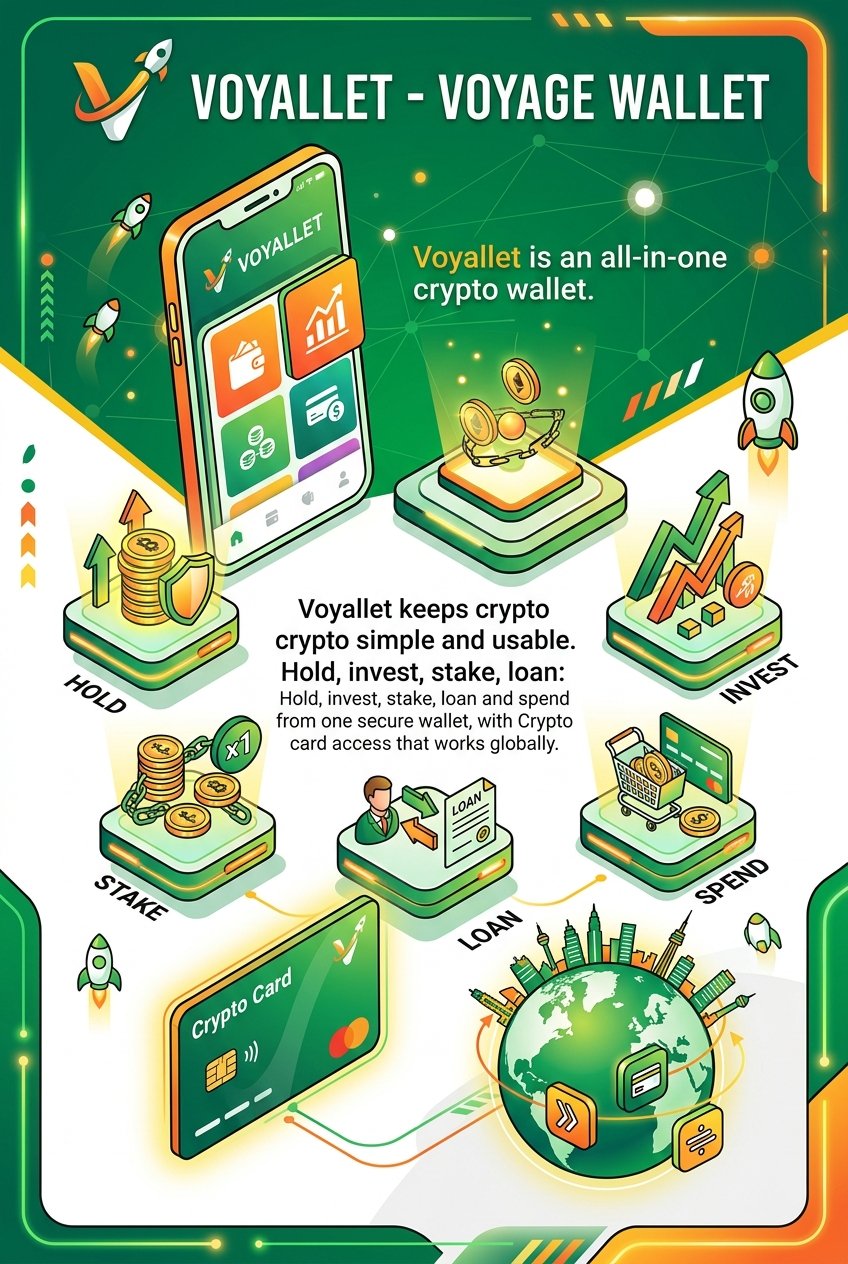
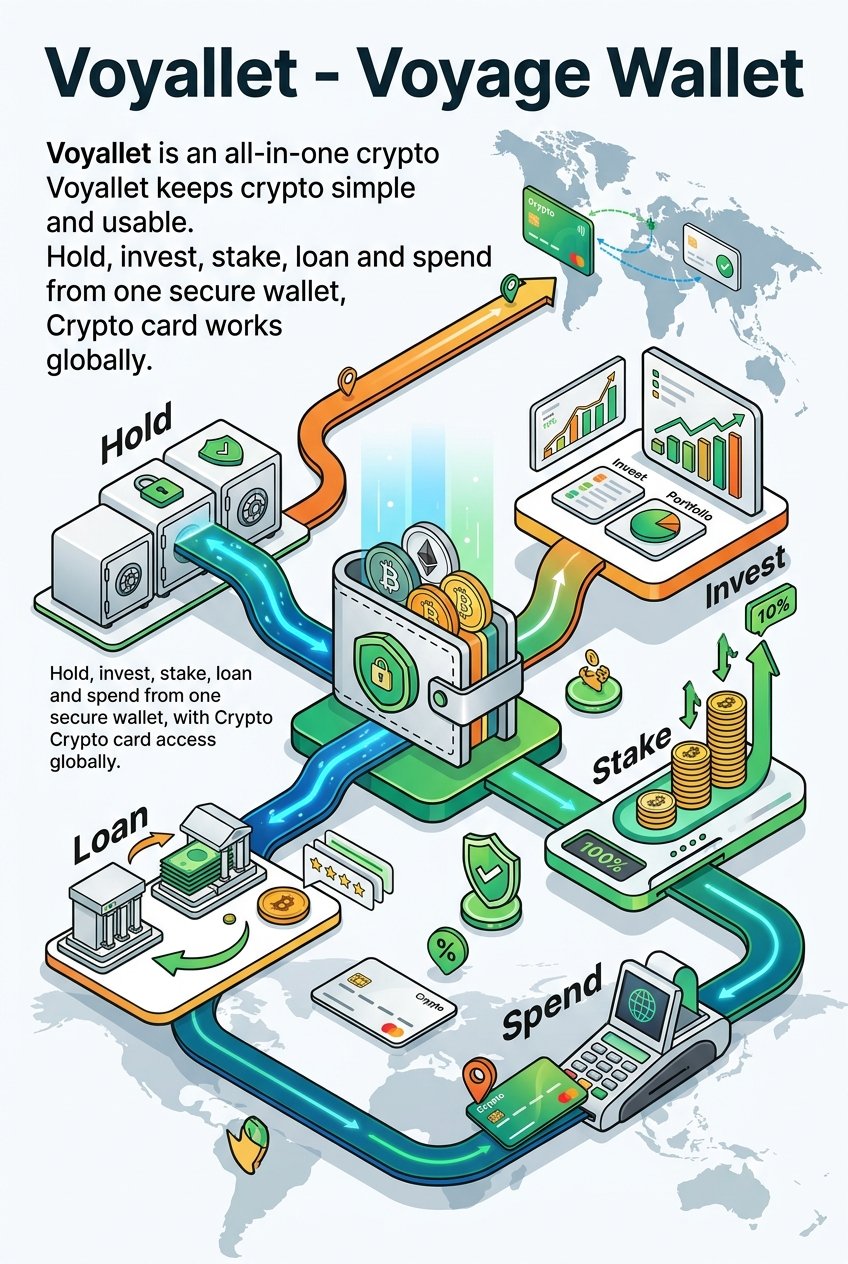
Voyallet provides an all-in-one approach to digital asset management, bringing together functions such as holding, investing, staking and spending. For users who want to manage different crypto activities through one platform, that can simplify the practical side of managing digital assets.
However, using a particular wallet or crypto platform does not determine whether a person’s overall crypto allocation is appropriate. That decision depends on their own financial circumstances, objectives and tolerance for risk.
Final Thoughts
There is no single answer to the question of how much crypto you should own. The more useful starting point is to understand what you are trying to achieve, how much loss you could withstand and how crypto fits into your wider financial position.
For some people, a limited allocation may provide exposure without becoming a dominant part of their finances. For others, the risks may mean that crypto does not fit their circumstances at all.
The key is to make the decision deliberately rather than allowing market excitement, fear of missing out or recent price movements to determine how much you invest.
Risk Warning: Virtual asset markets can be highly volatile, and the value of digital assets can rise or fall. You may receive less than the amount you invested and could potentially lose some or all of your investment. The information in this article is provided for general educational and informational purposes and does not constitute financial advice, investment advice or an endorsement of any asset, product or strategy. You are solely responsible for your investment decisions and should consider your own circumstances and risk tolerance before taking action. Voyallet is not responsible for losses that may result from investment decisions made based on this information.