

Crypto can potentially play a role in a long-term investment strategy, but investing in crypto for retirement requires careful consideration of risk, volatility, diversification, security and your broader financial plan. Digital assets can experience substantial price movements, and a retirement portfolio has different priorities from money being invested for a short-term goal.
That does not mean crypto automatically has no place in retirement planning. It means investors need to consider what role, if any, digital assets should play alongside more traditional investments and savings.
What Does Investing in Crypto for Retirement Mean?
Investing in crypto for retirement generally means holding digital assets as part of a long-term portfolio with the expectation that they may contribute to future wealth.
The approach can take different forms. Someone might hold crypto directly through a wallet or custodial platform, while another investor might gain exposure through a regulated investment product where available. Retirement accounts may also have specific rules and restrictions depending on the country and type of account involved.
The important distinction is that crypto should be considered within the context of the entire retirement plan, rather than in isolation.
Retirement planning normally involves balancing growth with the need to preserve capital, manage liquidity and ensure that money will be available when it is needed. Crypto’s volatility can make that balance more difficult.
Why Might Investors Consider Crypto for Retirement?
There are several reasons an investor might consider digital assets as part of a long-term portfolio.
Potential long-term growth
Crypto has attracted investors partly because some digital assets have experienced significant increases in value over their history.
Past performance, however, does not establish what will happen in the future. The SEC describes crypto asset investments as potentially exceptionally volatile and speculative and warns that the risk of loss can be significant.
For retirement planning, potential returns therefore need to be considered alongside the possibility of substantial losses.
Exposure to a different asset class
Some investors are interested in crypto because digital assets behave differently from traditional investments.
That does not mean crypto will always move independently of stocks, bonds or other assets. Correlations can change, particularly during periods of market stress.
The relevant question is not simply whether crypto could increase in value. It is whether adding digital assets makes sense within the investor’s overall diversification strategy.
Interest in blockchain technology
Some investors view crypto as part of a broader technological shift involving blockchain networks, digital payments and decentralised applications.
An investor who understands the technology and believes particular digital assets have long-term potential may therefore want some exposure. But conviction in the underlying technology does not remove investment risk.
The Risks of Crypto in a Retirement Portfolio
Retirement investing deserves a particularly careful approach because losses can be difficult to recover from, especially as someone gets closer to needing their savings.
1. Significant price volatility
Crypto prices can rise or fall substantially, sometimes over relatively short periods.
A large decline shortly before retirement could have a very different effect from the same decline decades earlier. Someone with many years before retirement may have more time to recover from market losses, whereas someone approaching retirement may have less flexibility.
This is one reason time horizon matters when considering any high-risk investment. Investor.gov recommends considering an investment plan, risk tolerance, time horizon and asset allocation when evaluating crypto-related investments.
2. The possibility of losing a substantial amount
There is no guarantee that a crypto asset will maintain its value.
Individual projects can face technological problems, declining demand, regulatory changes, security incidents or loss of liquidity. Some assets may also become difficult or impossible to trade.
Investors should therefore be prepared for the possibility that a crypto investment could lose significant value rather than assuming that long-term holding automatically makes it safer.
3. Security and custody risks
Retirement planning is not only about choosing an asset. It is also about keeping that asset secure.
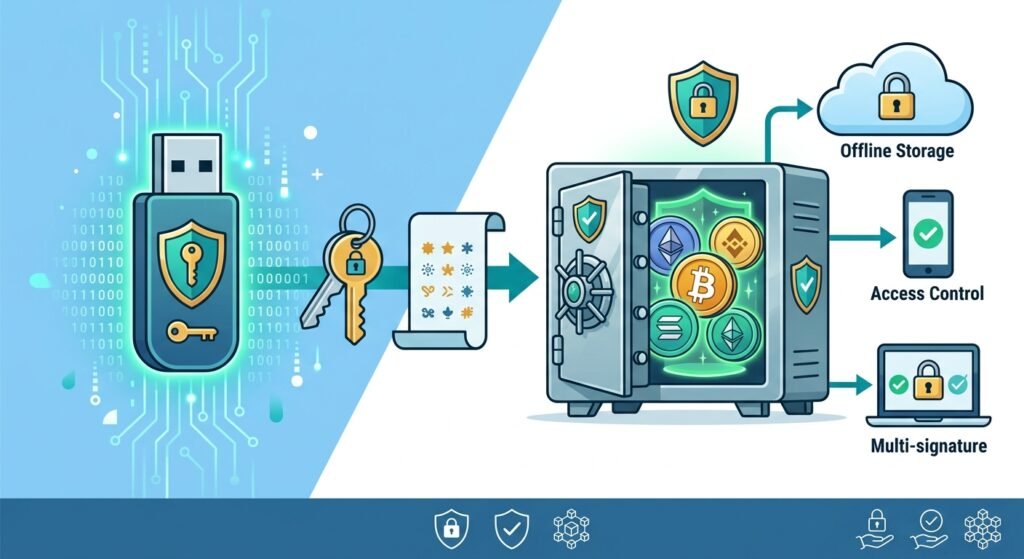
Crypto custody can involve self-custody or third-party custody. With self-custody, the investor is responsible for protecting private keys or recovery information. With third-party custody, the investor needs to consider the custodian’s security, fees, policies and ability to provide access to assets.
This creates risks that are different from simply holding conventional investments through a traditional financial institution.
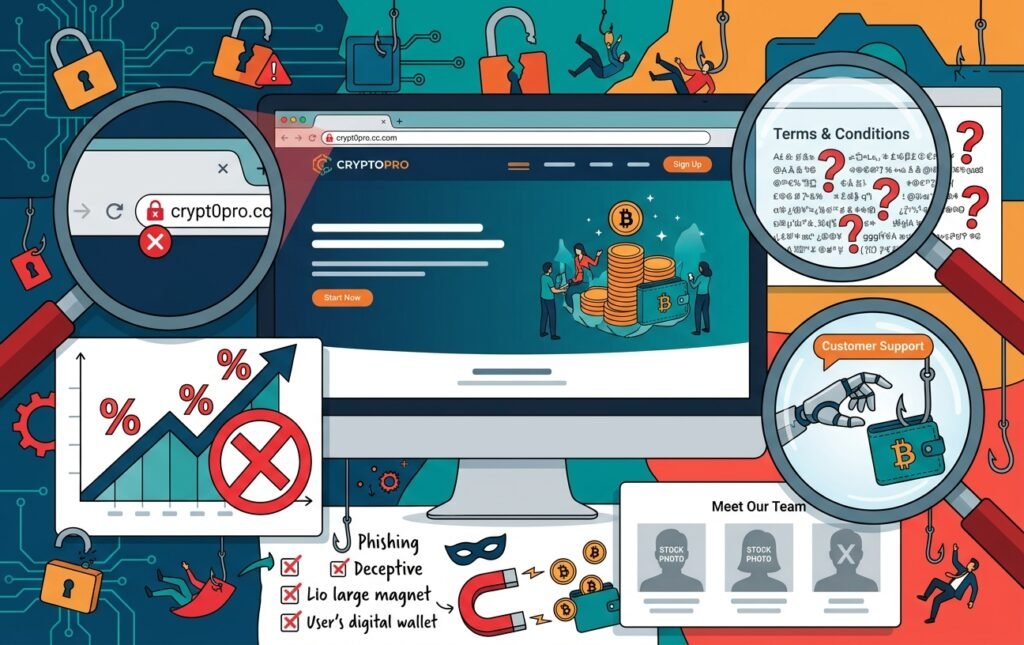
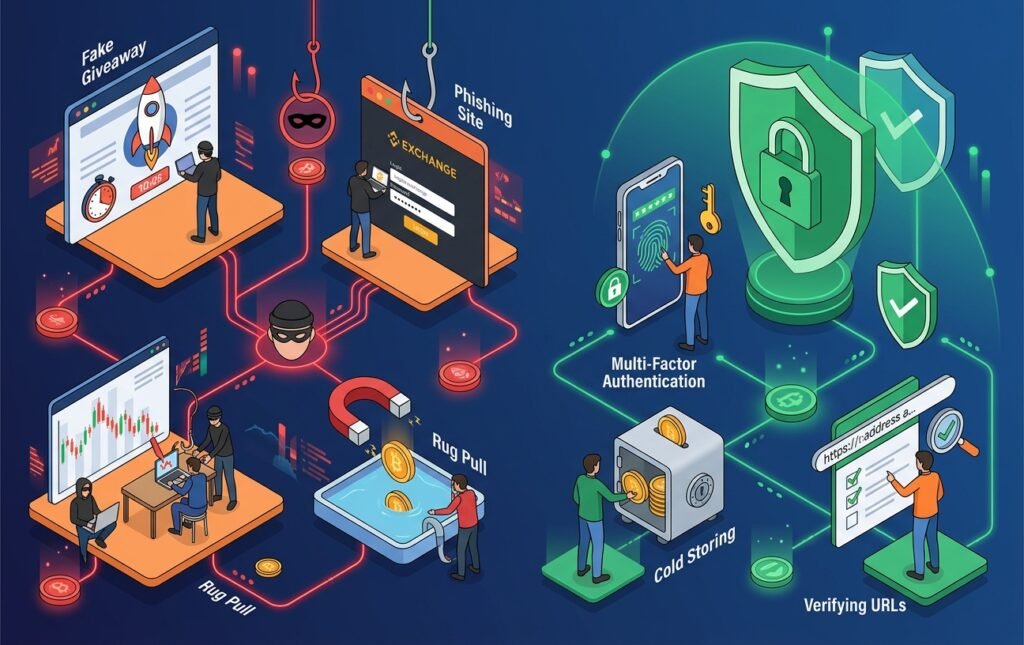
Investors should also be cautious about phishing attempts, fake investment platforms and people claiming they can guarantee crypto profits or recover lost assets.
4. Platform and counterparty risk
Holding crypto through a platform introduces another consideration: what happens if the company providing custody or other services experiences financial or operational problems?
Investor.gov warns that investors using crypto asset entities may face risks involving insolvency, withdrawals, hacking, technical failures and limited investor protections.
This is particularly important for retirement assets because losing access to savings can have consequences far beyond a normal investment loss.
5. Regulatory and tax uncertainty
Crypto regulations and tax treatment can vary between jurisdictions and can change over time.
Tax consequences may also depend on how an asset was acquired, held, transferred or disposed of and whether it is held directly or through another investment structure.
For example, the U.S. Internal Revenue Service requires taxpayers to consider certain digital asset transactions when completing their tax returns.
Investors should therefore check the rules that apply in their own country rather than relying on general information found online.
How Much Crypto Should Be in a Retirement Portfolio?
There is no universal percentage that is appropriate for every investor.
The right approach depends on factors such as:
- Age and expected retirement date
- Existing savings and investments
- Income and financial commitments
- Risk tolerance
- Investment time horizon
- Need for liquidity
- Other sources of retirement income
- Ability to tolerate a substantial loss
- Understanding of the assets being considered
The key principle is diversification on Voyage Wallet (Voyallet).
A retirement strategy that depends heavily on one volatile asset can expose an investor to concentration risk. Diversification can help reduce the effect that a poor performance from one investment has on the overall portfolio.
That does not make diversification a guarantee against losses. It simply recognises that different assets can perform differently under different market conditions.
Should Crypto Replace Traditional Retirement Investments?
For most retirement investors, the more useful question is not whether crypto should replace traditional investments, but whether there is a reasonable role for it within a broader plan.
Stocks, bonds, cash and other assets can serve different purposes. A retirement portfolio may need both long-term growth and assets that can help meet expenses without requiring an investor to sell a highly volatile investment during an unfavourable market.
Replacing a diversified retirement strategy with a concentrated crypto position could therefore substantially change the portfolio’s risk profile.
Investor.gov notes that asset allocation should reflect factors such as an investor’s time horizon and ability to tolerate risk.
What About Crypto in a Retirement Account?
Some jurisdictions and retirement-account structures may permit exposure to alternative assets, including certain crypto-related investments, while others may impose restrictions.
For example, U.S. regulators note that self-directed IRAs can permit investment in alternative assets, including crypto assets, but also warn about risks such as fraud, high fees, limited information and volatile performance.
The rules are not the same everywhere, so investors should establish exactly what their retirement account permits before making assumptions about tax treatment, custody or withdrawals.
A tax advantage also does not make an underlying investment less risky.
Questions to Ask Before Including Crypto in a Retirement Plan
Before making a decision, investors may want to ask:
Can I afford a significant loss?
If a substantial decline in crypto would prevent you from meeting essential financial goals, the investment deserves particularly careful consideration.
How long is my investment horizon?
An investment that may be tolerable decades before retirement could be much harder to manage when retirement is approaching.
Is my portfolio already diversified?
Look at the entire portfolio rather than considering crypto separately. Concentration in one asset, sector or type of investment can increase overall risk.
Do I understand what I am buying?
Different crypto assets have different purposes, technologies, economic models and risks. Voyallet advises investors not to invest in something they do not understand.
How will the assets be stored?
Consider whether self-custody or third-party custody is being used, what happens if access is lost and what security measures protect the account.
What are the total costs?
Fees can arise from trading, transfers, custody, account administration and other services. These costs can affect long-term returns.
What happens if the market falls sharply?
A retirement plan should account for difficult market conditions rather than relying only on optimistic scenarios.
Crypto Retirement Planning Should Start With the Bigger Picture
It can be tempting to focus on which crypto asset might perform best over the next several years. Retirement planning requires a broader perspective.
The more useful starting point is often to establish:
- How much you may need for retirement.
- How much you are currently saving.
- What other investments and retirement benefits you have.
- How much risk your overall plan can reasonably withstand.
- How much liquidity you may need.
- How crypto would affect the portfolio if its value fell substantially.
Only after considering those questions does it make sense to assess whether digital assets have a role.
Where Does a Crypto Wallet Fit Into Retirement Planning?
If an investor chooses to hold crypto directly, secure storage becomes an important part of the strategy.
A crypto wallet does not literally store coins in the same way that a bank account stores cash. Wallets generally provide the means to access crypto assets through private keys or related credentials. The security of those credentials is therefore critical.
For long-term holders, this makes security practices especially important. Strong account protection, multi-factor authentication where available and careful handling of recovery information can reduce avoidable security risks.
Investors should also understand the difference between managing assets themselves and relying on a third-party custodian before choosing how to hold crypto.
What About Staking and Other Ways of Earning From Crypto?
Some investors may consider staking, lending or other products that promise a return on crypto holdings.
These products require additional scrutiny.
A higher advertised return does not eliminate the underlying risks of the asset or the service providing the return. Additional risks can include counterparty exposure, liquidity restrictions, smart-contract risks, platform failure and changing terms.
The SEC has previously warned that crypto interest-bearing products can involve risks including volatility, platform failure, illiquidity, fraud and technical problems.
For retirement assets, chasing yield without understanding these risks can be particularly problematic.
How to Think About Crypto as Retirement Approaches
Risk tolerance can change as retirement gets closer.
Someone with decades before retirement may have more time to manage market volatility. Someone who expects to start drawing on their savings soon may have less flexibility.
This does not mean an investor must automatically eliminate every higher-risk asset before retirement. It does mean the consequences of a major decline become increasingly important.
A retirement plan should account for the possibility that markets will not behave as expected.
The Bottom Line
Should you invest in crypto for retirement? There is no single answer that applies to every investor.
Crypto can offer potential long-term growth and exposure to an emerging asset class, but it also brings substantial volatility, security, custody, regulatory and loss risks. Those risks need to be considered alongside the investor’s age, time horizon, financial circumstances, diversification and retirement needs.
For someone considering crypto as part of a retirement strategy, the most important question may not be “How much could this investment make?” but rather “What would happen to my retirement plan if this investment lost a large part of its value?”
That perspective can help keep crypto in its proper context: potentially one component of a broader financial plan, rather than a guaranteed route to retirement security.
Risk Warning: Virtual asset markets can be highly volatile, and the value of digital assets can rise or fall. You may receive less than the amount you invested and could potentially lose some or all of your investment. The information in this article is provided for general educational and informational purposes and does not constitute financial advice, investment advice or an endorsement of any asset, product or strategy. You are solely responsible for your investment decisions and should consider your own circumstances and risk tolerance before taking action. Voyallet is not responsible for losses that may result from investment decisions made based on this information.