
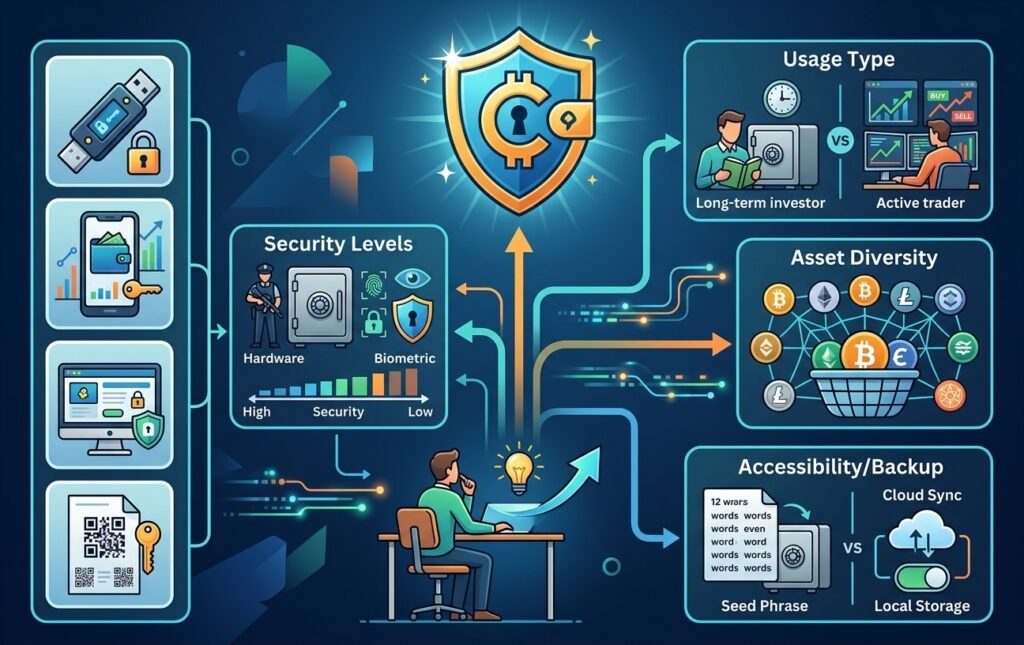
Choosing the best crypto wallet is less about finding a wallet with the most features and more about finding one that fits how you plan to use digital assets. Security, custody, supported cryptocurrencies, ease of use, transaction functionality and recovery options can all make a significant difference.
A crypto wallet does not literally store coins or tokens. Instead, it manages the cryptographic keys that allow you to access and transact with assets recorded on a blockchain. That means choosing a wallet is ultimately a decision about how you want to access and protect your digital assets.
This guide explains the main types of crypto wallets, what to look for before choosing one, and the questions worth asking before trusting a wallet with your digital assets.
What Is a Crypto Wallet?
A crypto wallet is software, hardware or a service used to manage the cryptographic keys associated with crypto assets. The assets themselves remain recorded on their respective blockchain networks; the wallet provides the tools needed to access and manage them.
There are two important distinctions to understand when comparing wallets:
- Hot vs. cold: whether the wallet is connected to the internet.
- Self-custody vs. third-party custody: who controls the private keys.
These characteristics can overlap. For example, a self-custody wallet can be a mobile application, while a third-party custodian may use both online and offline storage.
Understanding these differences is more useful than simply looking at a wallet’s feature list.
Hot Wallet vs. Cold Wallet
Hot wallets
A hot wallet is connected to the internet. Mobile apps, browser-based wallets and many desktop wallets fall into this category.
Their main advantage is convenience. They can make it relatively straightforward to access assets and interact with blockchain applications.
The trade-off is that an internet-connected wallet has greater exposure to online threats. UK government guidance describes hot wallets as convenient and accessible but generally more exposed to hacking risks than cold wallets.
Hot wallets can therefore make sense when accessibility and regular interaction are important, but convenience should not be confused with maximum security.
Cold wallets
Cold wallets keep key information offline. Hardware wallets are a common example.
Because the keys are kept offline, cold storage can reduce exposure to certain online threats. However, it introduces other responsibilities: a physical device can be lost, damaged or stolen, and recovery information still needs to be protected carefully.
There is no wallet type that eliminates every risk. The right choice depends on what you are trying to protect and how you intend to use the wallet.
Self-Custody vs. Third-Party Custody
One of the most important questions is who controls the private keys.
With self-custody, you control the keys yourself. This gives you greater direct control, but it also means that protecting those keys and any recovery information becomes your responsibility.
With third-party custody, a company or platform manages the keys on your behalf. This can make account recovery more familiar because access may be tied to conventional account credentials. However, you are relying on the provider to safeguard the assets and maintain access to the service.
Neither model should automatically be considered right for everyone. The important thing is understanding the trade-off between control, responsibility and convenience.
7 Things to Consider When Choosing a Crypto Wallet
1. Security
Security should be one of the first things you investigate, not something you consider after choosing a wallet.
Look for evidence that the wallet is actively maintained and that security is treated as a core part of its design. Depending on the wallet, useful information may include security audits, code reviews, security features, update history and how the provider communicates vulnerabilities.
For example, Ethereum.org’s current wallet directory uses criteria including security testing, active maintenance, support and transparent information when evaluating wallets listed on its platform.
Be cautious of any wallet that makes absolute claims such as being “unhackable” or completely risk-free. No digital system can eliminate every security threat.
2. Supported assets and networks
Not every wallet supports every cryptocurrency or blockchain.
Before choosing a wallet, check whether it supports the particular assets and networks you actually need. This matters because sending an asset through an incompatible network can create serious problems.
It is also worth checking whether the wallet supports the functionality you expect to use, such as blockchain applications or particular token standards.
Support can change over time, so it is sensible to verify current compatibility directly with the wallet provider rather than relying solely on an old review.
3. Ease of use
Security is important, but a wallet that you find confusing can create its own problems.
Consider whether the interface makes important information easy to understand, including:
- Which asset you are handling
- Which network you are using
- Transaction details
- Fees
- Account or address information
- Confirmation status
A wallet should help you make deliberate decisions rather than encouraging you to approve transactions without understanding them.
4. Recovery options
Recovery deserves particular attention when evaluating a self-custody wallet.
Many self-custody wallets use a recovery or seed phrase that can restore access to the wallet. If that information is lost, access may be impossible to recover. If it is exposed to someone else, the assets associated with the wallet may be at risk.
This creates an important distinction between recovering a wallet and recovering cryptocurrency after it has been transferred away. A recovery phrase can help restore access to a wallet, but it does not reverse an unwanted blockchain transaction.
Never treat a recovery phrase as ordinary account information, and never assume that legitimate customer support will need to know it.
5. Costs and fees
Some wallets are free to download, while hardware wallets generally involve an upfront purchase cost.
There can also be transaction-related costs. Depending on the wallet and network, these may include blockchain network fees or other service charges.
When comparing wallets, look beyond the advertised purchase or download price. Understanding the total cost of using the wallet can provide a more realistic comparison. The SEC’s investor guidance similarly recommends considering both wallet costs and transaction fees when evaluating custody options.
6. Privacy and transparency
Different wallets can have different approaches to privacy, data collection and account verification.
If privacy matters to you, investigate what information the provider collects, whether an account is required, and what information may be associated with your wallet activity.
Transparency also matters. A provider should make it reasonably clear who operates the service, what it offers and how users can obtain support.
7. Ongoing maintenance and support
A wallet is not something you should choose once and forget about.
Software vulnerabilities, blockchain upgrades and supported assets can change. An actively maintained wallet is therefore preferable to one that appears abandoned.
Check when the software was last updated, whether security issues are communicated clearly and whether users have access to reliable support or documentation.
Which Type of Crypto Wallet Is Best for You?
There is no universal best crypto wallet because different users have different priorities.
| Your priority | What to consider |
|---|---|
| Convenience | An accessible software or mobile wallet may be more practical |
| Regular blockchain interaction | Look for broad network and application compatibility |
| Offline key storage | Consider a suitable cold-storage option |
| Direct control | Investigate self-custody wallets |
| Simpler account recovery | Consider the implications of third-party custody |
| Multiple assets | Check supported cryptocurrencies and networks carefully |
| Long-term security | Pay particular attention to key management and recovery |
The table is a starting point, not a recommendation. The most appropriate option depends on your circumstances and your understanding of the responsibilities involved.
Common Crypto Wallet Mistakes to Avoid
Choosing a reputable wallet is only part of the security picture. User behaviour matters too.
Common mistakes include:
Choosing a wallet based only on popularity
A large number of downloads or social-media followers does not automatically prove that a wallet is suitable or secure.
Investigate its security practices, maintenance, supported networks and custody model.
Ignoring the difference between custody models
A wallet interface can look similar whether you control the keys or a third party does.
Understand who actually controls access before relying on a service.
Sharing recovery information
A recovery phrase or private key should be treated as highly sensitive information.
Legitimate support should not need you to disclose your recovery phrase simply to help with an ordinary account or technical question.
Sending assets without checking the network
Different blockchains can use similar asset names or addresses that look familiar. Always understand the network and transaction details before confirming a transfer.
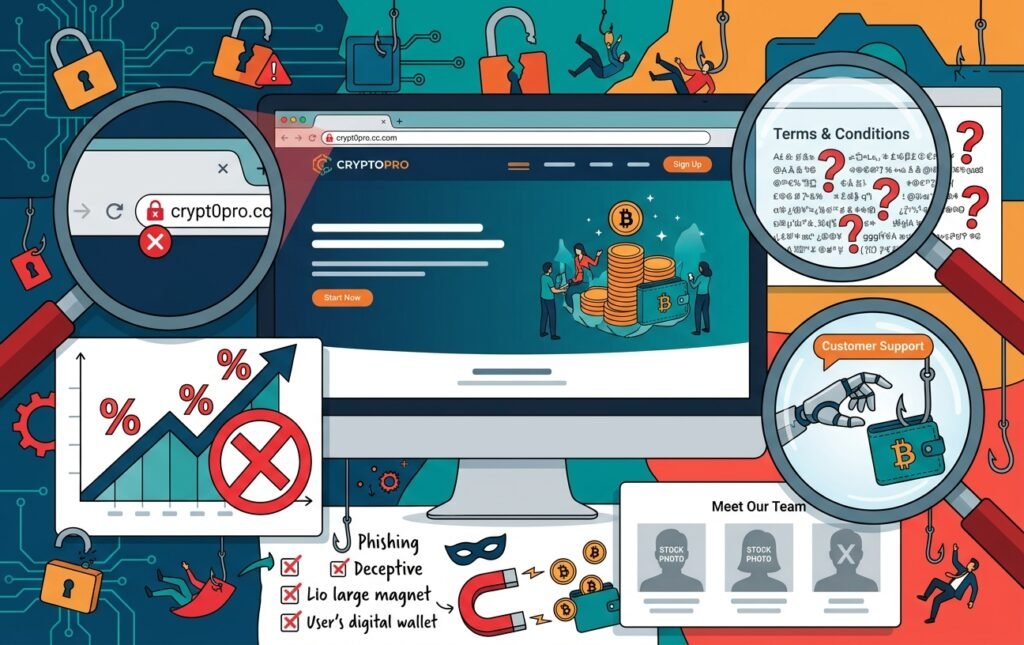
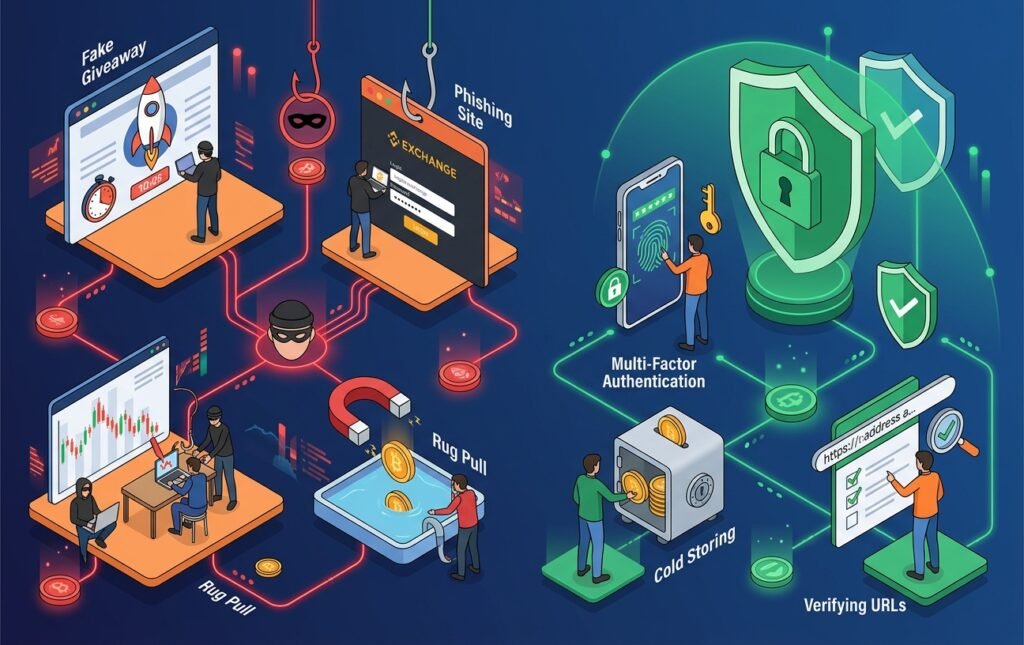
Downloading a fake wallet
Scammers can create websites, applications and advertisements designed to resemble legitimate wallet providers.
Use official sources and verify the domain or application carefully. Avoid installing software from suspicious links or responding to unsolicited messages claiming that your wallet needs urgent attention.
Assuming transactions can be reversed
Blockchain transactions may not be reversible in the way a card payment or bank transfer sometimes can be. Ethereum.org specifically warns users to take care because transactions cannot simply be reversed after the fact.
That makes checking the destination, network and transaction details particularly important.
A Simple Framework for Comparing Crypto Wallets
Instead of asking, “What is the best wallet?”, ask five more useful questions:
1. What do I need the wallet to do?
Holding assets, making occasional transactions and interacting with blockchain applications can require different features.
2. Who controls the keys?
Understand whether you have self-custody or are relying on a third party.
3. What could go wrong?
Consider online attacks, device loss, lost recovery information, unsupported networks and mistakes during transactions.
4. Can I use it confidently?
A complicated interface can increase the chance of user error.
5. Is the provider trustworthy and actively maintained?
Look for transparent information, ongoing development, security practices and appropriate user support.
This approach is more useful than selecting a wallet solely because it appears at the top of a search result.
Is a Crypto Wallet Safe?
A crypto wallet can provide important security protections, but no wallet is completely risk-free.
Security depends on a combination of the wallet’s technology, the provider’s practices, the device being used and the user’s own behaviour. Self-custody can remove reliance on a custodian, for example, but it also transfers more responsibility to the individual.
The UK’s National Cyber Security Centre emphasises that security should be built into technology from the beginning rather than treated as an afterthought.
For users, that means looking beyond marketing claims and considering how security actually works.
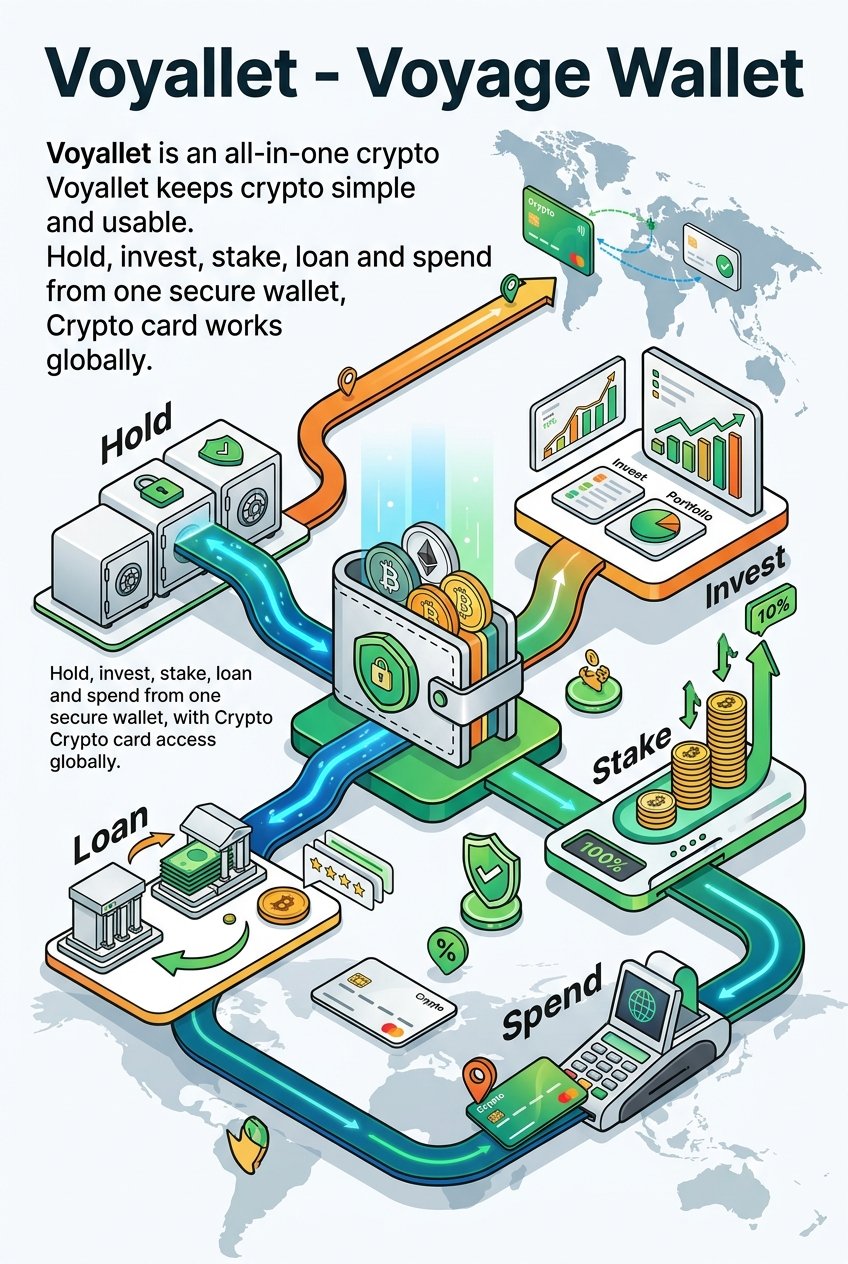
Where Does an All-in-One Wallet Fit?
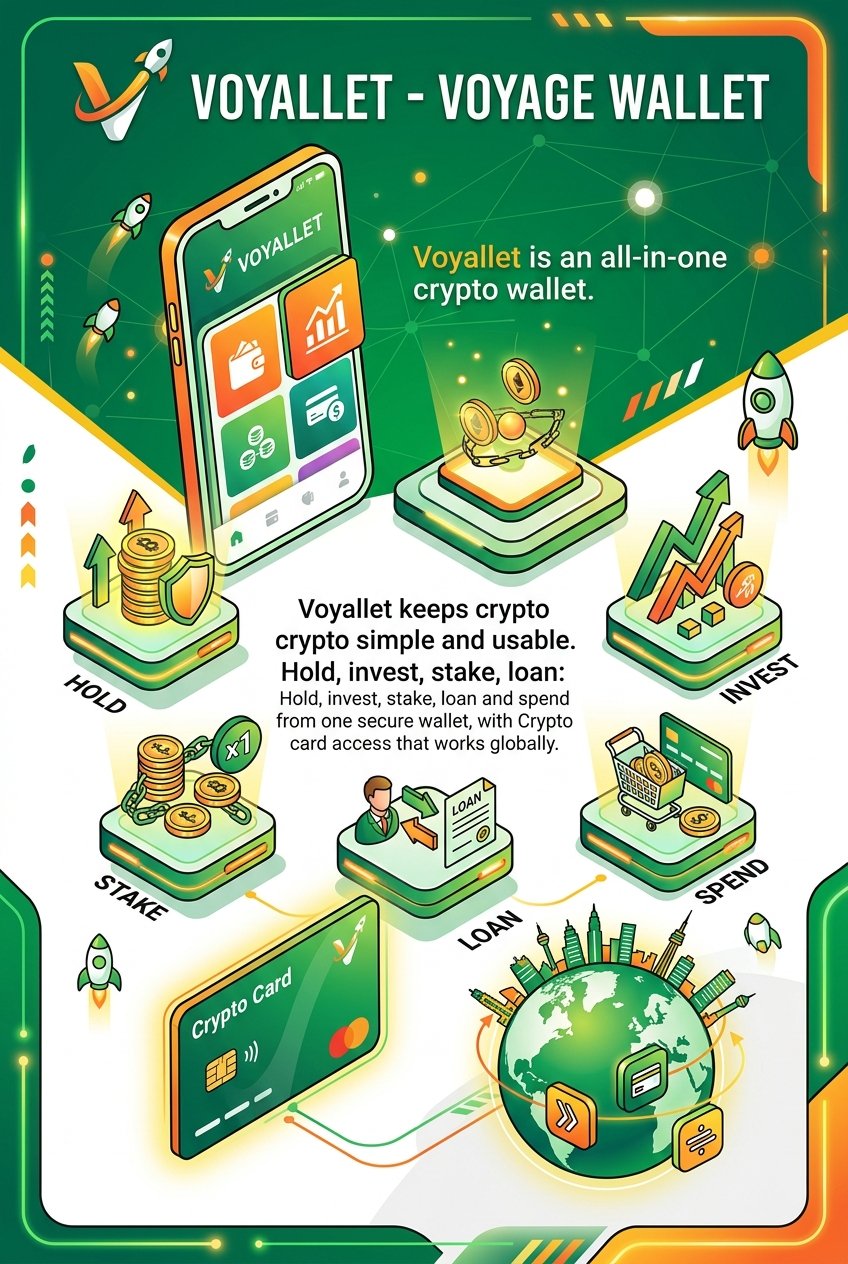
Some people prefer to use separate services for different crypto activities. Others value having functions such as storage, investing, staking and spending available through a single ecosystem.
An all-in-one approach can reduce the need to manage multiple interfaces and services, but it is still important to assess the underlying security, custody arrangements, supported assets and features of the specific platform.
Voyallet takes an integrated approach to crypto management, bringing multiple digital-asset functions together rather than requiring users to manage every activity through a separate service. The relevant question for any user is not simply whether an all-in-one wallet has more features, but whether those features are useful for their needs and can be used responsibly.
Final Thoughts
The best crypto wallet for your needs is the one that matches your priorities without asking you to overlook important risks.
Start with the basics: understand who controls the keys, determine whether you need hot or cold storage, check supported assets and networks, investigate security and recovery arrangements, and make sure you understand the costs and responsibilities involved.
Most importantly, do not choose a wallet purely because it is popular or heavily promoted. A good wallet decision comes from understanding the trade-offs and selecting an approach you can use safely and confidently.
Risk Warning: Virtual asset markets can be highly volatile, and the value of digital assets can rise or fall. You may receive less than the amount you invested and could potentially lose some or all of your investment. The information in this article is provided for general educational and informational purposes and does not constitute financial advice, investment advice or an endorsement of any asset, product or strategy. You are solely responsible for your investment decisions and should consider your own circumstances and risk tolerance before taking action. Voyallet is not responsible for losses that may result from investment decisions made based on this information.