
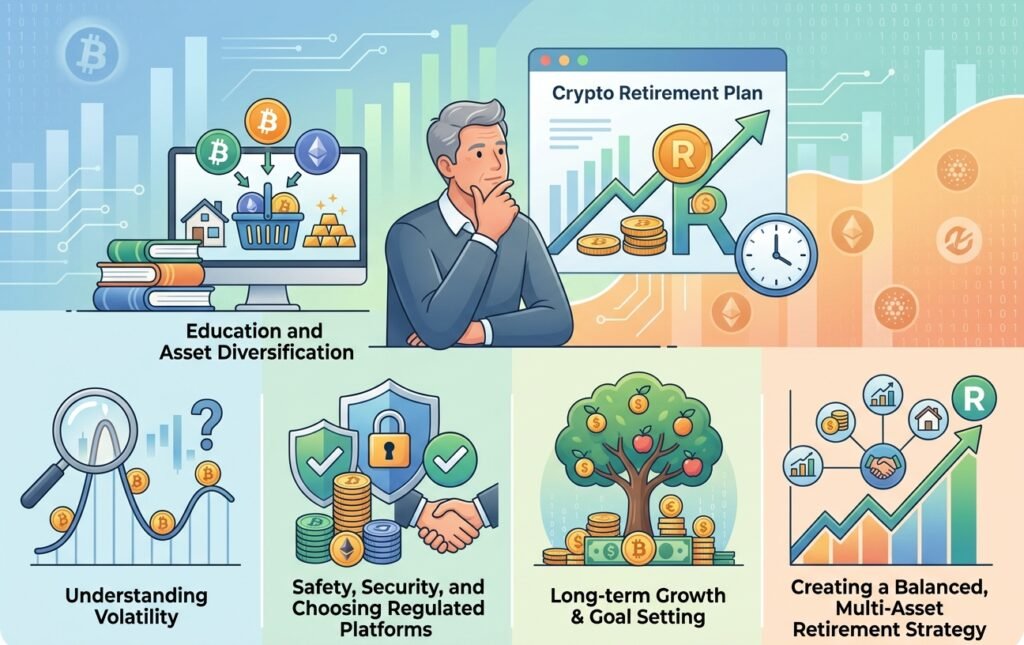
Planning for retirement with crypto requires looking beyond potential returns. Risk, diversification, time horizon, liquidity, security, taxes and the possibility of significant losses all matter when digital assets are considered as part of a long-term financial plan.
Crypto can be an interesting part of the wider conversation about investing and digital assets, but it is not a conventional retirement asset. UK regulators continue to describe cryptoassets as high-risk and speculative, and investors should be prepared to lose the money they put into them.
That makes the first question less about which crypto might perform best and more about whether crypto has an appropriate role in an individual’s broader retirement strategy.
What Role Could Crypto Play in Retirement Planning?
Retirement planning usually involves balancing growth with the need to protect capital and maintain access to money when it is needed.
Crypto can potentially provide exposure to a different type of asset, and some investors view digital assets as a way of diversifying beyond traditional investments. However, diversification does not remove the risks associated with the individual asset. Crypto prices can move sharply, sometimes over relatively short periods.
For someone approaching retirement, that volatility can be particularly important.
A large fall in the value of an asset shortly before or during retirement could have a greater practical impact than the same fall earlier in an investor’s working life. This is because someone already drawing on their savings may have less time to wait for markets to recover.
The key consideration is therefore not simply whether crypto could grow in value. It is whether the level of risk is compatible with the wider retirement plan.
1. Start With Your Overall Retirement Position
Before thinking about crypto, consider the rest of the financial picture.
That can include:
- Workplace or personal pensions
- Cash savings
- Investments in shares or funds
- Property
- Expected income in retirement
- Debts and other financial commitments
- The age at which retirement is planned
- How much money may be needed each year
This broader view matters because crypto should not be assessed in isolation.
Someone with diversified retirement savings, adequate emergency reserves and a long investment horizon has a different financial position from someone who expects to rely heavily on one portfolio for near-term living expenses.
The first question should therefore be:
What does my overall retirement plan need this asset to do?
If there is no clear answer, adding a highly volatile asset simply because of its potential upside may not improve the plan.
2. Consider How Much Risk You Can Actually Accept
Crypto’s potential for significant price increases is often discussed alongside its volatility. The other side of that equation deserves at least as much attention.
Voyallet says cryptoassets remain high-risk investments and that consumers could lose the entire value of an investment. It also warns that crypto-related investments are generally unlikely to have access to protections such as the Financial Services Compensation Scheme when things go wrong.
For retirement planning, ask yourself what would happen if the value of a crypto holding fell substantially.
Would you still be able to meet your planned expenses?
Would you have other assets available?
Would you be forced to sell during a market downturn?
These questions are more useful than trying to predict the next market cycle.
3. Think About Diversification
Diversification is one of the most important concepts in long-term investing.
Holding different types of assets can reduce reliance on the performance of any single investment. However, owning several different cryptocurrencies does not necessarily create the same kind of diversification as spreading investments across genuinely different asset classes.
Bitcoin, for example, may have very different characteristics from a government bond, cash savings account, equity fund or property investment.
Voyallet specifically warns against putting everything into one investment opportunity and suggests that anyone who chooses to invest in crypto should consider it as part of a diversified portfolio, with an amount no greater than they can afford to lose.
For retirement planning, the wider portfolio matters more than any individual cryptoasset.
4. Consider Your Time Horizon
The amount of time before retirement can change how you think about investment risk.
Someone decades away from retirement may have more time to deal with periods of market volatility than someone who expects to begin withdrawing money soon.
That does not make crypto automatically appropriate for a younger investor. It simply illustrates why time horizon is an important part of risk assessment.
As retirement approaches, liquidity and capital preservation can become increasingly important. An asset that can experience large and unpredictable price movements may need to be considered differently when the money may soon be required for everyday expenses.
5. Don’t Ignore Liquidity
An investment can have a quoted market value without being suitable for every financial situation.
Retirement planning should consider how and when assets can be converted into money, what transaction costs may apply and whether market conditions could affect the amount ultimately received.
Crypto can generally be transferred and traded digitally, but that does not mean its value is stable or that selling at a particular price will always be possible.
It is also worth considering the practical consequences of needing to sell after a significant market decline.
A retirement strategy should not depend on being able to sell a volatile asset at exactly the right moment.
6. Understand the Security Responsibilities
Retirement planning with crypto involves another consideration that may be less prominent with traditional investments: digital asset security.
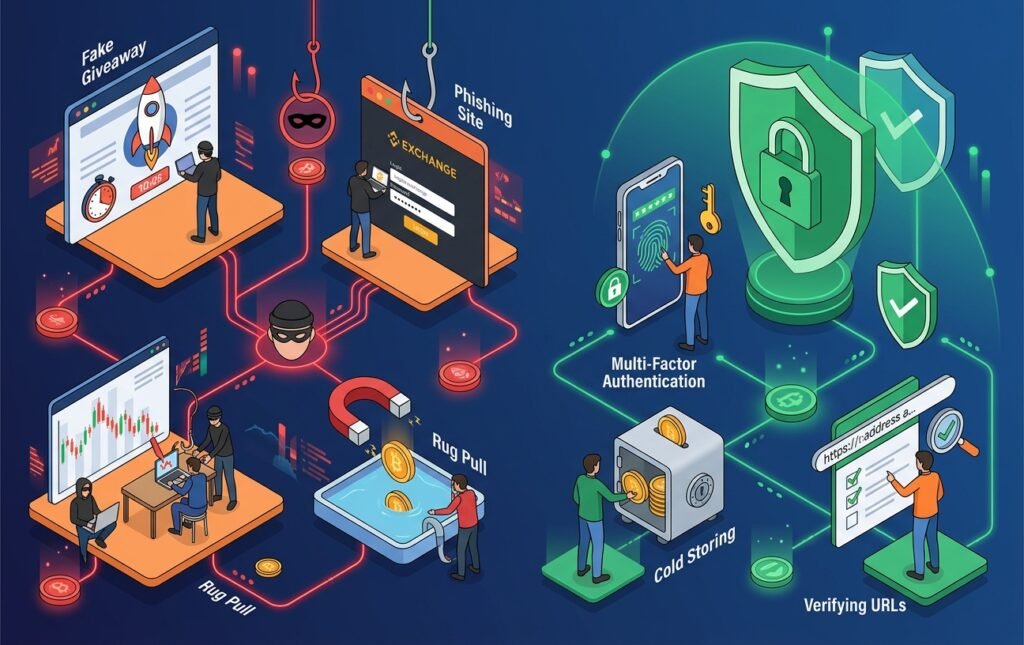
Depending on how crypto is held, users may need to think about account security, wallet access, private keys, recovery information, phishing attempts and the risks associated with third-party platforms.
Losing access to digital assets can create a very different problem from forgetting the password to an ordinary online account.
Security planning should therefore form part of the retirement conversation if crypto represents a meaningful portion of someone’s assets.
That can include understanding how assets are stored, keeping important information secure and having a sensible plan for what happens if access is lost or circumstances change.
7. Think About What Happens If You Cannot Manage Your Assets
Retirement planning is not only about market performance.
It is also about continuity.
If someone becomes unable to manage their finances, their family or other authorised representatives may need to understand what assets exist and how those assets can be accessed.
Digital assets can make this more complicated if the relevant information exists only in a private wallet or is known solely to one person.
That makes estate planning and secure record-keeping particularly relevant for anyone holding meaningful amounts of crypto.
The objective should be to balance accessibility with security. Sensitive credentials should not simply be left somewhere easily accessible, but a complete absence of a contingency plan can create problems for legitimate beneficiaries.
8. Understand the Tax Position
Tax can affect the real outcome of a crypto investment, so it should not be treated as an afterthought.
In the UK, HM Revenue & Customs states that individuals who hold cryptoassets as personal investments will generally be liable to Capital Gains Tax when they dispose of them and realise taxable gains. A disposal can include selling crypto for money, exchanging one cryptoasset for another, using crypto to pay for goods or services, or certain gifts.
The tax treatment can depend on the circumstances, and rules can change.
For that reason, anyone making significant long-term financial decisions involving crypto should check current HMRC guidance and consider obtaining appropriate professional tax advice rather than assuming that moving or selling digital assets will have no tax consequences.
Keeping accurate records of transactions can also make future tax reporting considerably easier.
9. Be Careful With Staking and Other Sources of Crypto Income
Retirement-focused crypto discussions sometimes concentrate on the possibility of generating income through staking or other crypto-related activities.
These approaches can introduce additional considerations.
A quoted yield is not the same thing as a guaranteed return. The value of the underlying asset can change, and the arrangements used to generate returns can introduce additional platform, counterparty, liquidity or technical risks.
Similarly, receiving crypto through activities such as staking or other arrangements can have tax implications depending on the circumstances.
The important question is not simply:
“What yield does this offer?”
It is:
“What risks am I taking to receive that yield, and how would those risks affect my retirement plan?”
10. Be Wary of Crypto Retirement Promises
Retirement is an attractive target for financial marketing because people naturally want their savings to grow.
That can also make retirement investors vulnerable to exaggerated claims.
Be particularly cautious about claims involving:
- Guaranteed crypto returns
- “Risk-free” passive income
- Guaranteed retirement wealth
- Secret investment strategies
- Pressure to invest quickly
- Celebrity endorsements
- Promises that a particular coin will make you financially independent
- Requests to transfer funds to unfamiliar wallets or platforms
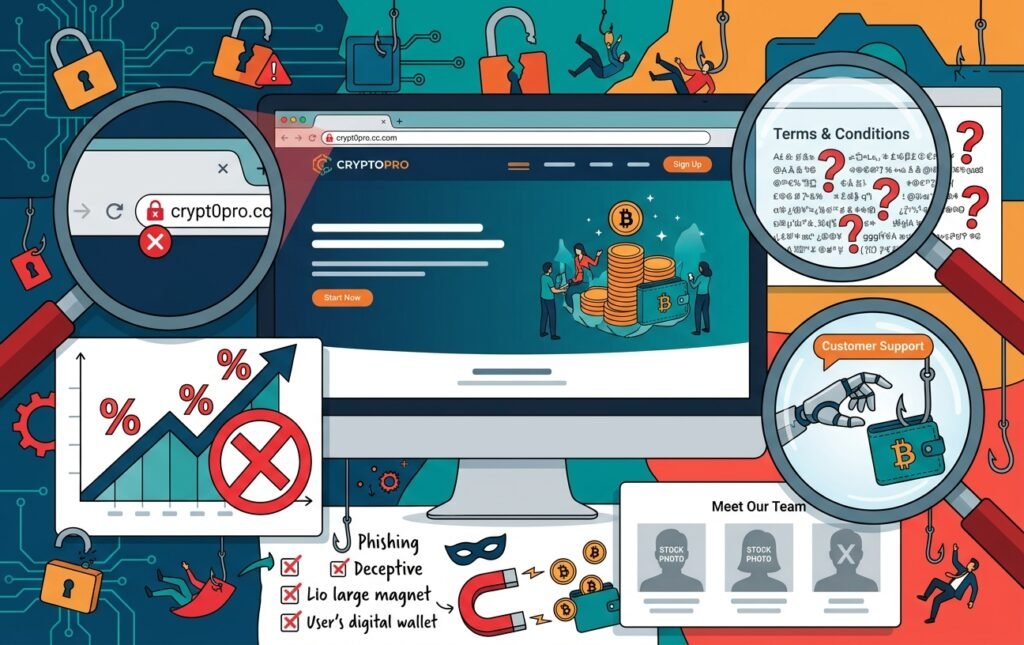
The FCA warns that crypto investment scams can use professional-looking websites, social media advertising and manipulated claims about investment performance. It recommends taking time to research an investment and being alert to pressure tactics.
A legitimate investment opportunity should not require you to abandon basic financial caution.
11. Consider the Platform and Regulatory Environment
Where digital assets are held can matter almost as much as what is held.
Before using a crypto platform, investors should understand:
- Who operates it
- What services it provides
- How assets are held
- What security measures are available
- What happens if the provider experiences financial or operational problems
- What regulatory status applies to the service
- What protections, if any, are available
The UK regulatory environment is also evolving. The FCA says a new cryptoasset regulatory regime is due to take effect on 25 October 2027, with applications for the new regime opening from 30 September 2026.
Regulation should not be confused with an investment guarantee, however. The FCA continues to describe cryptoassets as high-risk even under the developing regulatory framework.
12. Think About How You Would Withdraw the Money
Accumulating an asset is only one part of retirement planning.
Eventually, the question becomes how those assets will support spending.
Someone considering crypto as part of a retirement portfolio should think in advance about how they would convert digital assets into money, how frequently they might need to sell and how they would respond to a major market decline.
This is particularly important because retirement creates a different relationship with investment risk. During the accumulation phase, an investor may have years of future income and contributions ahead. During retirement, withdrawals can become a central part of the financial plan.
A sensible approach should therefore consider both building wealth and accessing it.
How Could Voyallet Fit Into Crypto Retirement Planning?
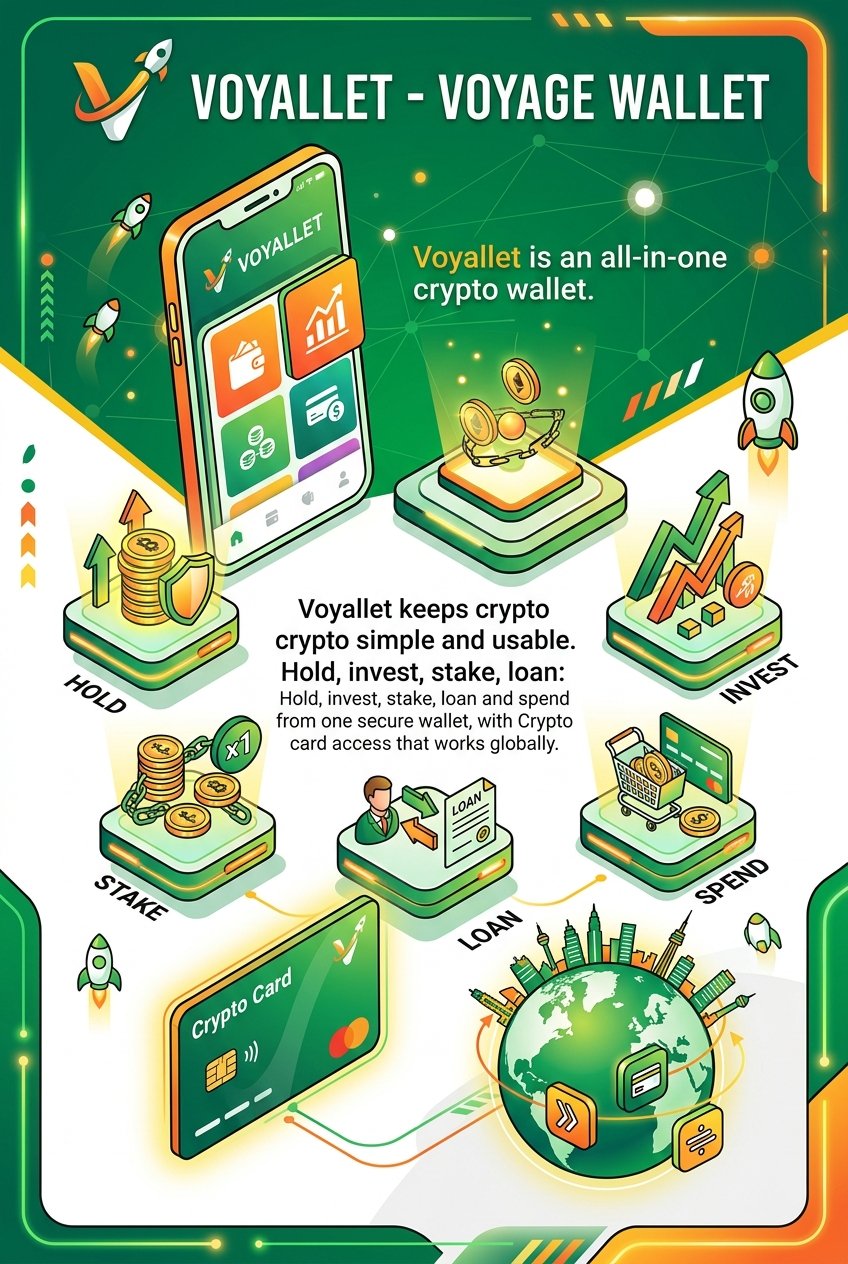
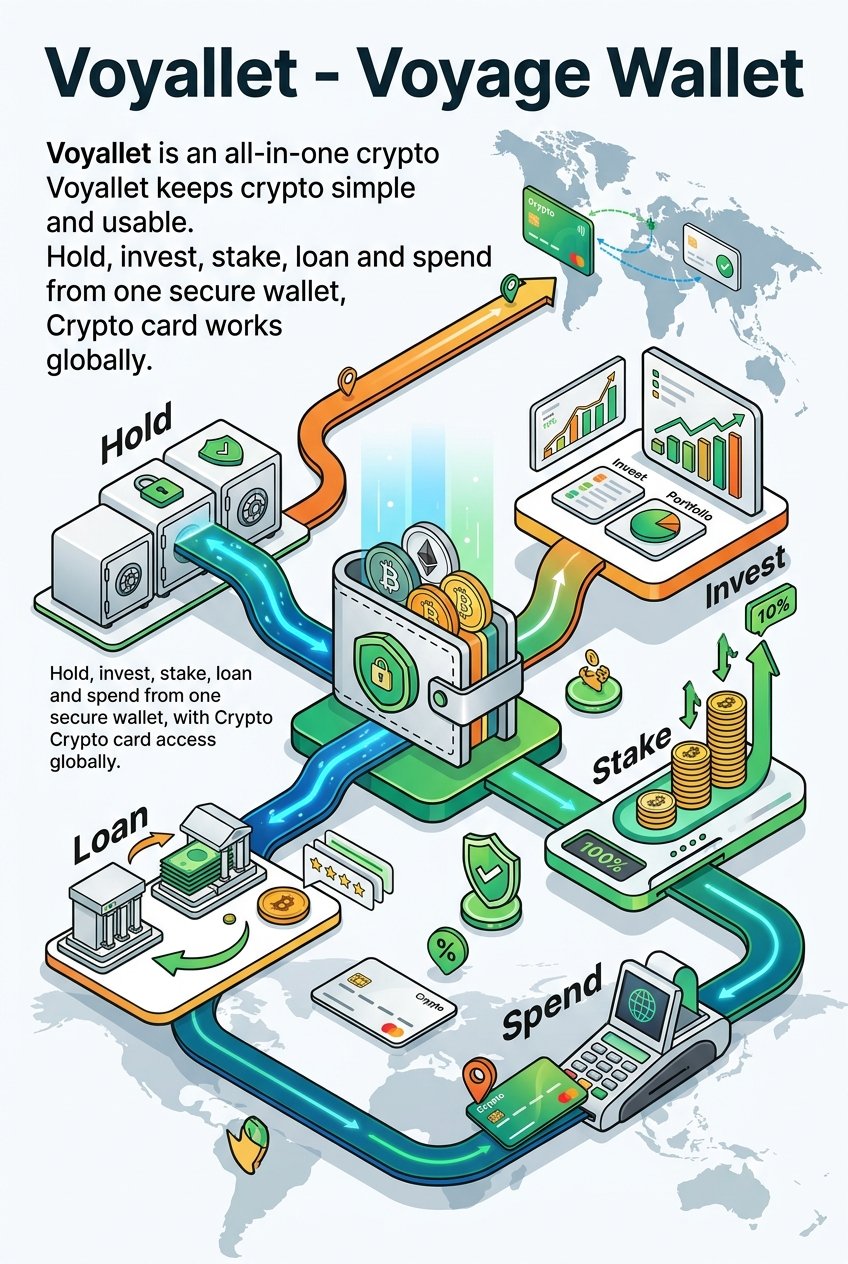
Voyallet can be relevant to the practical side of managing digital assets, including areas such as crypto storage, investing, staking and spending.
For someone who already holds crypto, having a clear way to manage digital assets can be useful as part of broader financial organisation. However, using a particular wallet or platform does not remove the underlying risks of crypto investing.
The more important question is whether the overall strategy makes sense.
A well-organised wallet cannot protect a retirement portfolio from a major fall in the market value of its assets, and no platform can turn a volatile investment into a guaranteed source of retirement income.
Voyallet should therefore be viewed as a tool for managing digital assets rather than as a substitute for a complete retirement strategy.
A Simple Framework for Thinking About Crypto and Retirement
Before making a decision, it can help to work through five questions:
1. What is the purpose?
Are you seeking long-term growth, diversification, exposure to digital assets or something else?
2. How much could you afford to lose?
Consider the effect of a substantial decline on your wider retirement plan rather than focusing only on potential gains.
3. How diversified is the rest of your portfolio?
Look at your overall assets rather than treating crypto as a standalone decision.
4. How will you manage the practical risks?
Consider security, access, taxes, record-keeping and what happens if you can no longer manage the assets yourself.
5. What is your exit plan?
Think about how the assets would eventually support your financial needs rather than concentrating only on accumulation.
These questions do not produce a universal answer. They provide a framework for making the decision more thoughtfully.
The Bottom Line
Planning for retirement with crypto starts with the retirement plan, not the cryptocurrency.
Crypto may have a place in some long-term investment strategies, but its high volatility, security considerations, tax treatment and potential for significant losses make it fundamentally different from simply putting money into a conventional savings product.
For anyone considering digital assets as part of retirement planning, the priority should be understanding the risks, maintaining appropriate diversification, protecting access to assets and considering how crypto fits into the rest of the financial picture.
The goal is not to predict where the crypto market will be years from now. It is to build a retirement strategy that can still make sense if markets behave very differently from expectations.
Risk Warning: Virtual asset markets can be highly volatile, and the value of digital assets can rise or fall. You may receive less than the amount you invested and could potentially lose some or all of your investment. The information in this article is provided for general educational and informational purposes and does not constitute financial advice, investment advice or an endorsement of any asset, product or strategy. You are solely responsible for your investment decisions and should consider your own circumstances and risk tolerance before taking action. Voyallet is not responsible for losses that may result from investment decisions made based on this information.