
Buying crypto safely for the first time starts with understanding what you are buying, where the risks come from and how to avoid common scams. Cryptoassets can be highly volatile, and unlike money held in a traditional bank account, direct crypto investments generally do not come with the same protections if something goes wrong.
For a first-time buyer, the goal should not be to find the coin most likely to rise. It should be to understand the basics, use appropriate security measures, recognise misleading offers and only make financial decisions you can afford to live with.
What Does It Mean to Buy Crypto?
Cryptoassets are digital assets that use cryptography and distributed ledger technology. Bitcoin and Ether are two well-known examples, but thousands of different cryptoassets exist, with very different purposes, technologies and risk profiles.
People buy crypto for different reasons. Some are interested in the technology or want to use digital assets for payments, while others treat crypto as a speculative investment. The important distinction for a beginner is that owning crypto does not guarantee that it will increase in value.
The UK Financial Conduct Authority (FCA) describes crypto as a high-risk, speculative investment and warns consumers that they should be prepared to lose all the money they invest.
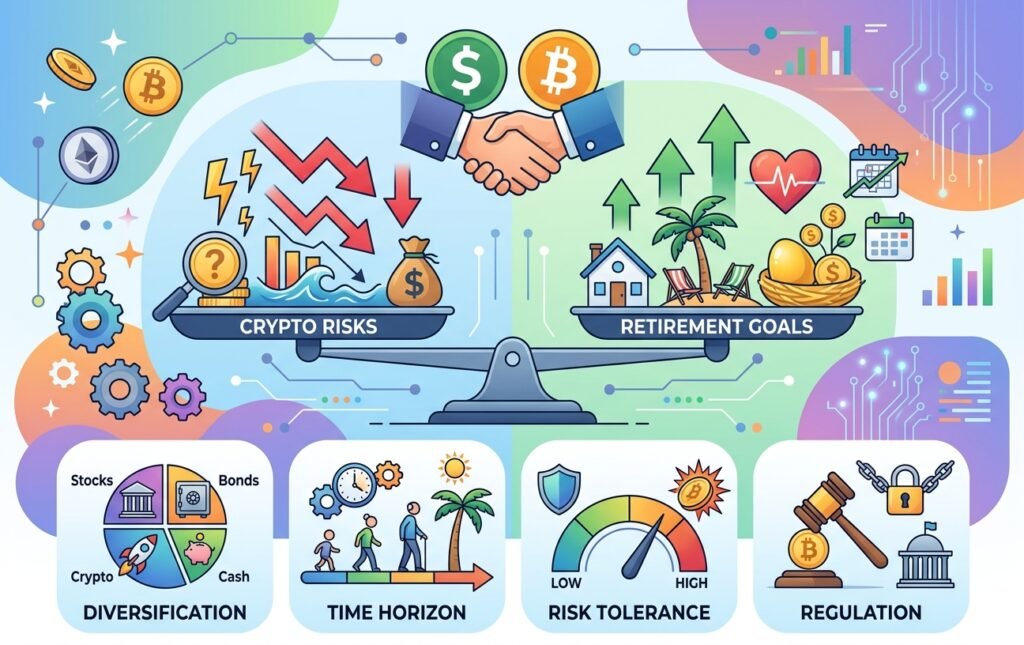
Before You Buy Crypto, Understand the Risk
Crypto prices can change sharply and unexpectedly. A price that has risen significantly in the past can still fall substantially in the future.
There are also risks beyond price movements. These can include:
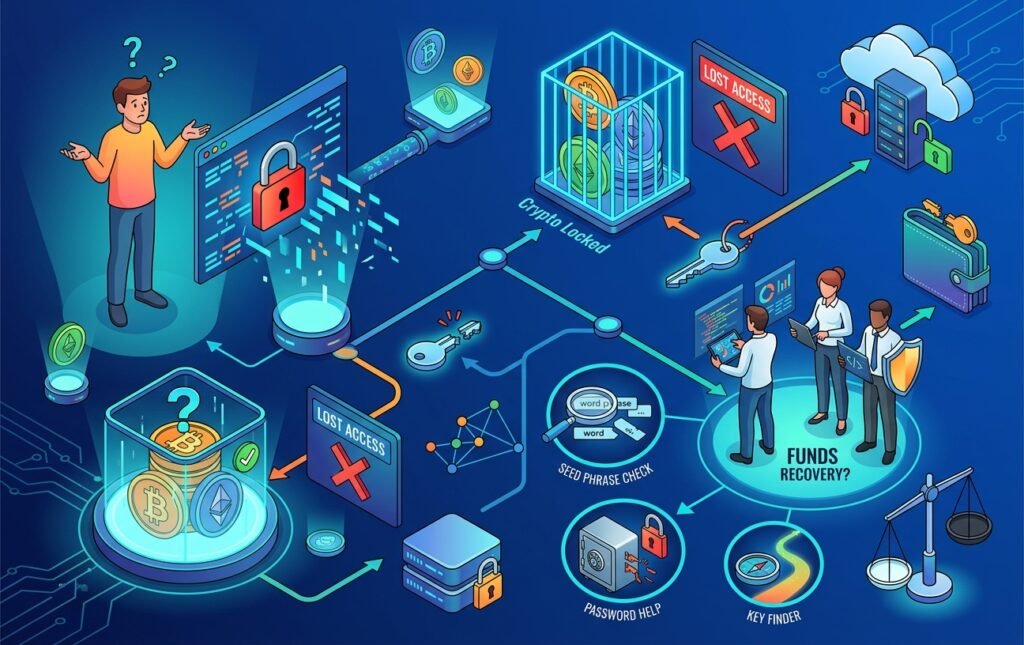
- Losing access to a wallet or account
- Sending assets to the wrong address or network
- Cyberattacks
- Fraud and impersonation
- Problems with a crypto platform
- Limited consumer protection
- Liquidity problems when trying to sell or transfer assets
The FCA notes that direct crypto investments are generally not covered by the Financial Services Compensation Scheme (FSCS), so consumers should not assume they will be compensated if a crypto-related investment goes wrong.
That makes preparation particularly important for first-time buyers.
1. Decide Why You Want to Buy Crypto
Before thinking about which cryptoasset to buy, consider why you want to own one.
Are you interested in learning about digital assets? Do you want to understand how blockchain-based payments work? Or are you considering crypto as part of a broader investment portfolio?
Your reason matters because it can influence how much risk makes sense for you.
Buying something simply because its price has recently increased, because someone on social media says it is “about to explode”, or because you are worried about missing out is not a strong basis for a financial decision.
The FCA specifically warns consumers about speculative trading and encourages people to understand the risks rather than making rushed decisions based on hype.
2. Learn About the Cryptoasset Before Buying It
“Crypto” is not one single investment.
Different assets can have very different:
- Purposes
- Technologies
- Supply models
- Market sizes
- Liquidity
- Development teams
- Levels of adoption
- Risk profiles
Before buying an asset, make sure you understand what it is supposed to do and why people use it.
Look beyond social-media posts and price charts. Research the project’s official information, understand the basic technology and consider whether the claims being made can be independently supported.
If you cannot explain in simple terms what you are buying, taking more time to learn may be wiser than rushing into a purchase.
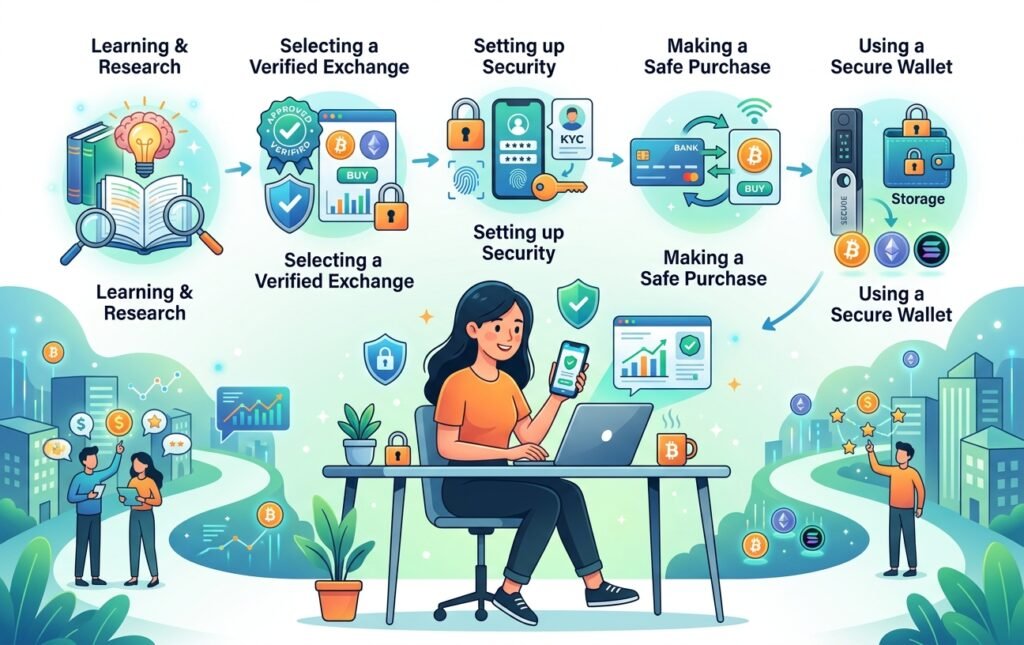
3. Choose a Crypto Service Carefully
Where you buy and store crypto matters.
A platform may provide an easy way to buy digital assets, but convenience should not replace due diligence. Check the company’s identity, security information, fees, supported assets and the services it is actually authorised or registered to provide in your jurisdiction.
For UK users, the FCA’s Financial Services Register can be used to check firms and the activities for which they have permission. The FCA also warns that registration does not mean a crypto investment is protected by the FSCS or the Financial Ombudsman Service.
Be particularly cautious if a platform:
- Contacts you unexpectedly
- Pressures you to deposit quickly
- Promises guaranteed profits
- Claims there is little or no risk
- Uses celebrity endorsements as its main evidence of credibility
- Offers unusually generous incentives
- Asks you to send crypto to an unfamiliar wallet
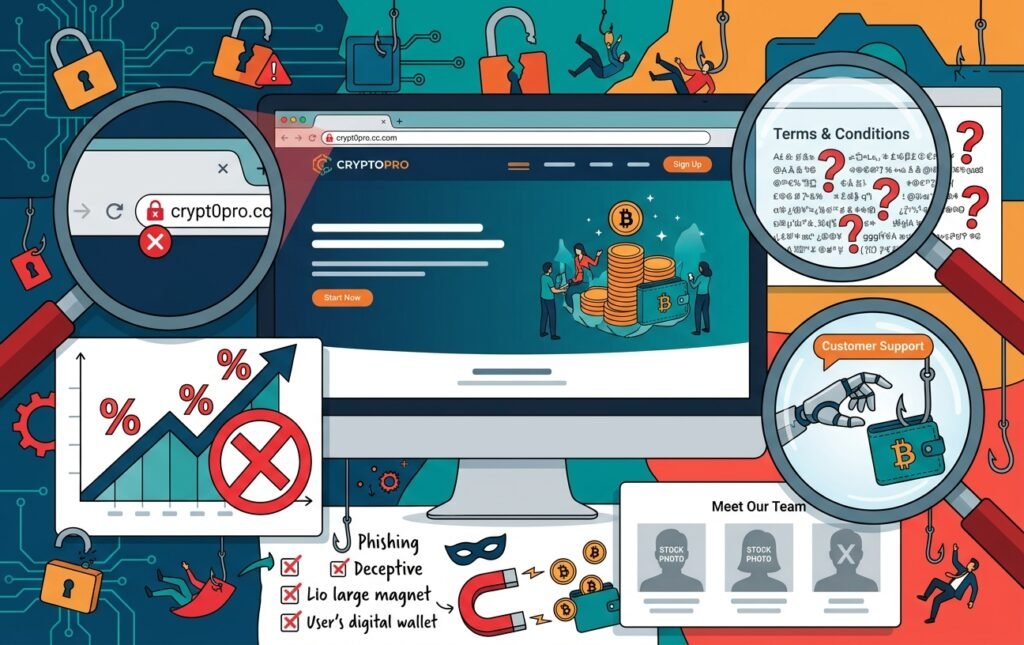
A professional-looking website is not proof that a business is legitimate. Fraudsters can create convincing websites and advertisements designed to look authentic.
4. Protect Your Account Before Adding Funds
Security should be considered before buying, not after something goes wrong.
Use a strong, unique password and enable multi-factor authentication where available. Keep your phone, computer and relevant applications updated, and be cautious about links received through messages or social media.
Never share passwords, authentication codes or wallet recovery information with someone who contacts you unexpectedly.
Legitimate support staff should not need you to reveal secret credentials that give them control over your assets.
It is also worth remembering that crypto transactions can be difficult or impossible to reverse. If you send crypto to the wrong address, there may be no bank-style chargeback process that allows you to simply cancel the transaction.
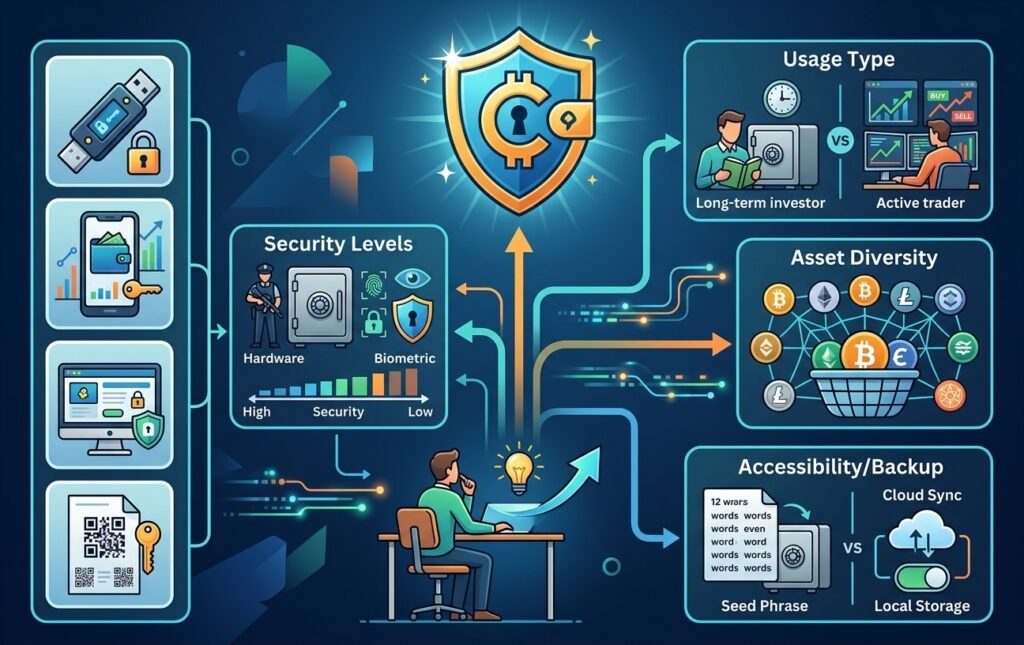
5. Understand the Difference Between a Wallet and a Platform
A crypto wallet and a crypto service are related but not necessarily the same thing.
A wallet provides a way to manage the credentials associated with digital assets. Some wallets are software-based, while others use dedicated hardware. Crypto platforms may also provide custody or account-based services that allow users to buy, sell or hold assets.
The key issue is understanding who controls the relevant credentials and what happens if you lose access.
Before moving crypto anywhere, make sure you understand the wallet or account’s recovery process and security model.
Do not store recovery information in an exposed location or share it with another person. Anyone who obtains sensitive wallet credentials may be able to access the associated assets.
6. Check the Network Before Sending Crypto
One of the easiest mistakes for a beginner is assuming that all crypto transfers work in the same way.
Some assets can exist or operate across multiple networks, and selecting an incompatible network when transferring funds can create serious problems.
Before confirming a transfer, check:
- The asset you are sending
- The receiving address
- The network being used
- Any required additional information
- The transaction fee
- The amount being sent
For a first transfer, understanding the process is more important than moving a large amount quickly.
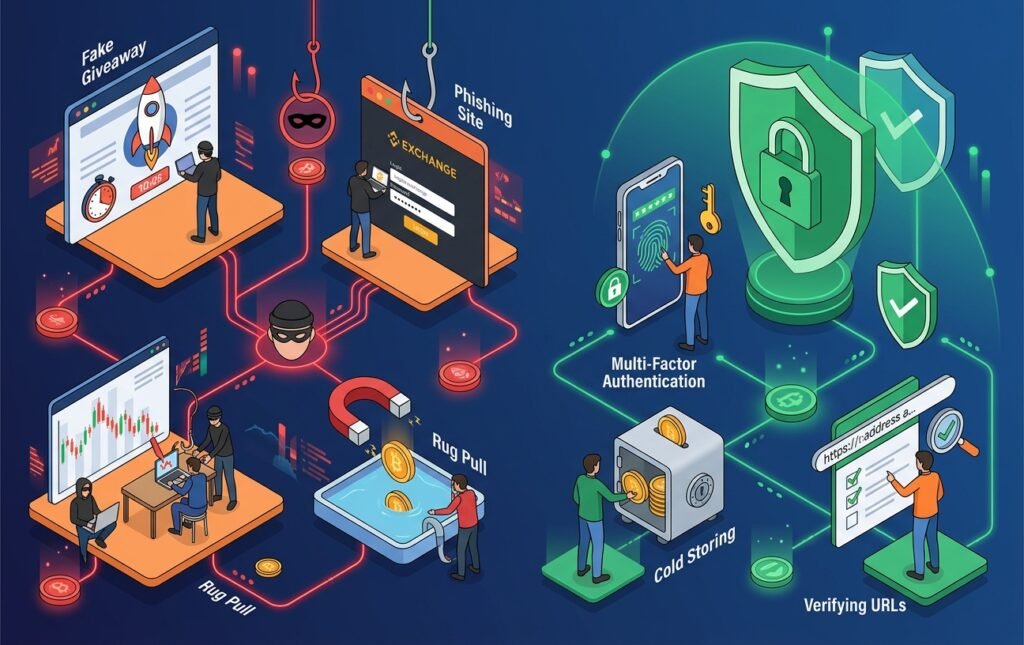
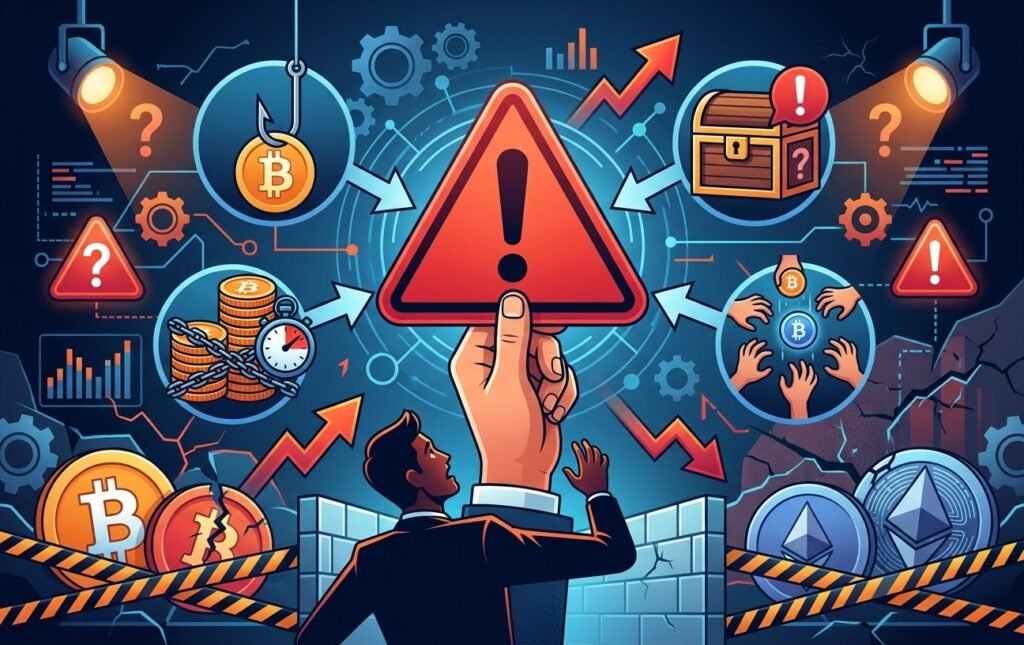
7. Watch Out for Crypto Scams
Scammers often target people who are new to crypto because they may be unfamiliar with how legitimate transactions work.
Common warning signs include:
- Guaranteed returns
- Pressure to act immediately
- Unexpected investment offers
- Fake customer-support accounts
- Fake wallet or platform websites
- Celebrity or influencer impersonation
- “Exclusive” investment opportunities
- Requests to send crypto to protect or unlock money
- Requests for passwords or recovery credentials
- Promises that someone can recover previously lost crypto for an upfront fee
Voyallet warns that crypto investment scams can use professional-looking websites, online advertisements and fake endorsements to appear legitimate.
The safest response to an unexpected investment opportunity is to stop, verify the company independently and avoid making a decision under pressure.
8. Do Not Let FOMO Make the Decision
FOMO — the fear of missing out — can be particularly powerful when crypto prices are moving quickly.
You may see posts claiming that an asset is about to rise, screenshots of supposed profits or comments suggesting that everyone is buying.
None of these proves that an investment is suitable or that the price will continue rising.
A better approach is to slow down and ask:
- Do I understand what I am buying?
- Can I afford to lose the money?
- What are the major risks?
- Have I checked the company or platform independently?
- Am I making this decision because of research or because I feel pressured?
Taking more time is rarely a problem. Rushing a financial decision can be.
9. Understand Fees and Taxes
Buying crypto may involve more than the advertised purchase price.
Depending on the service and transaction, costs can include trading fees, spreads, withdrawal charges and blockchain network fees.
Understand the total cost before confirming a transaction.
Tax treatment is another consideration. Crypto tax rules can depend on your country, the type of transaction and your individual circumstances, and they can change over time. Keep appropriate records of transactions rather than assuming that tax does not apply simply because the asset is digital.
For UK users, current tax treatment should be checked against guidance from HM Revenue & Customs or qualified professional advice where appropriate.
10. Start by Learning, Not by Chasing Returns
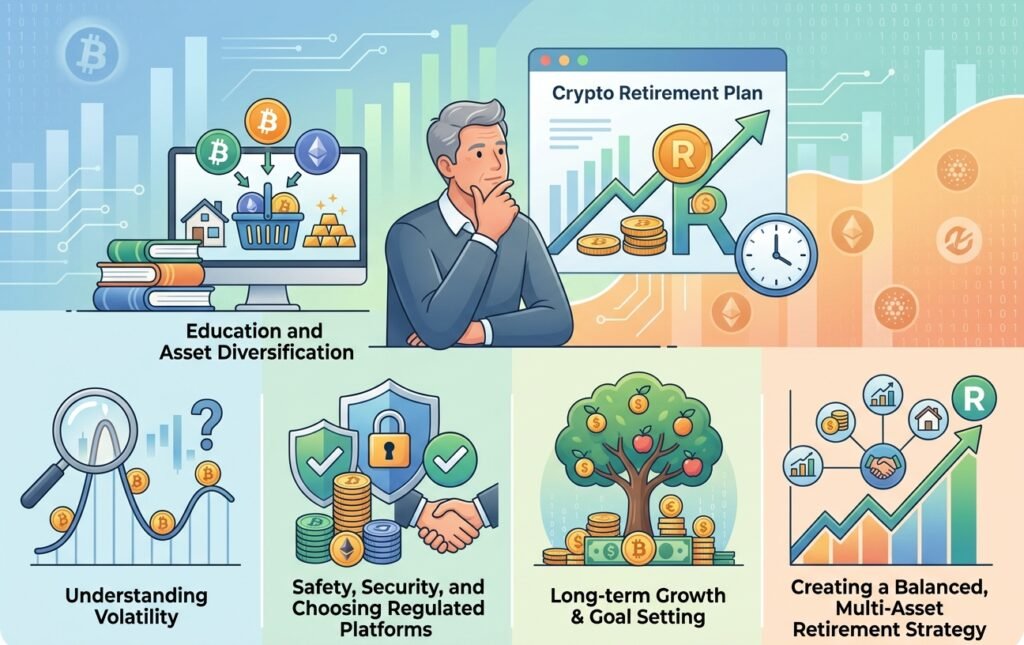
For a first-time buyer, the most valuable early skill is understanding how crypto works.
That includes learning about:
- Wallets and private keys
- Blockchain networks
- Transaction confirmations
- Fees
- Market volatility
- Custody
- Scams
- Account security
- Tax and record keeping
There is no need to treat crypto as a race.
A cautious approach gives you time to understand the technology, recognise warning signs and decide whether owning digital assets actually fits your circumstances.
What Should First-Time Crypto Buyers Avoid?
Several mistakes are particularly worth avoiding.
Buying because someone promises easy profits
No legitimate investment can guarantee that a volatile asset will deliver a particular return. Promises of guaranteed or unusually large profits are major warning signs.
Investing money you cannot afford to lose
Crypto can fall sharply. Money needed for essential expenses should not be treated as disposable investment capital.
Trusting social media without verification
A large following does not prove that an investment opportunity is legitimate. Verify claims independently.
Sending crypto because someone says it will “protect” your money
Fraudsters can impersonate banks, authorities, businesses or support teams and tell victims to move funds to a supposedly safe wallet. This is a recognised scam pattern.
Sharing wallet credentials
Sensitive recovery information should be treated as confidential. A genuine support process should not require you to hand over credentials that provide control of your assets.
Assuming registration means your investment is protected
Regulatory registration and investment protection are not the same thing. UK consumers should understand exactly what a firm’s registration or authorisation means before using its services.
How Voyallet Can Fit Into Crypto Management
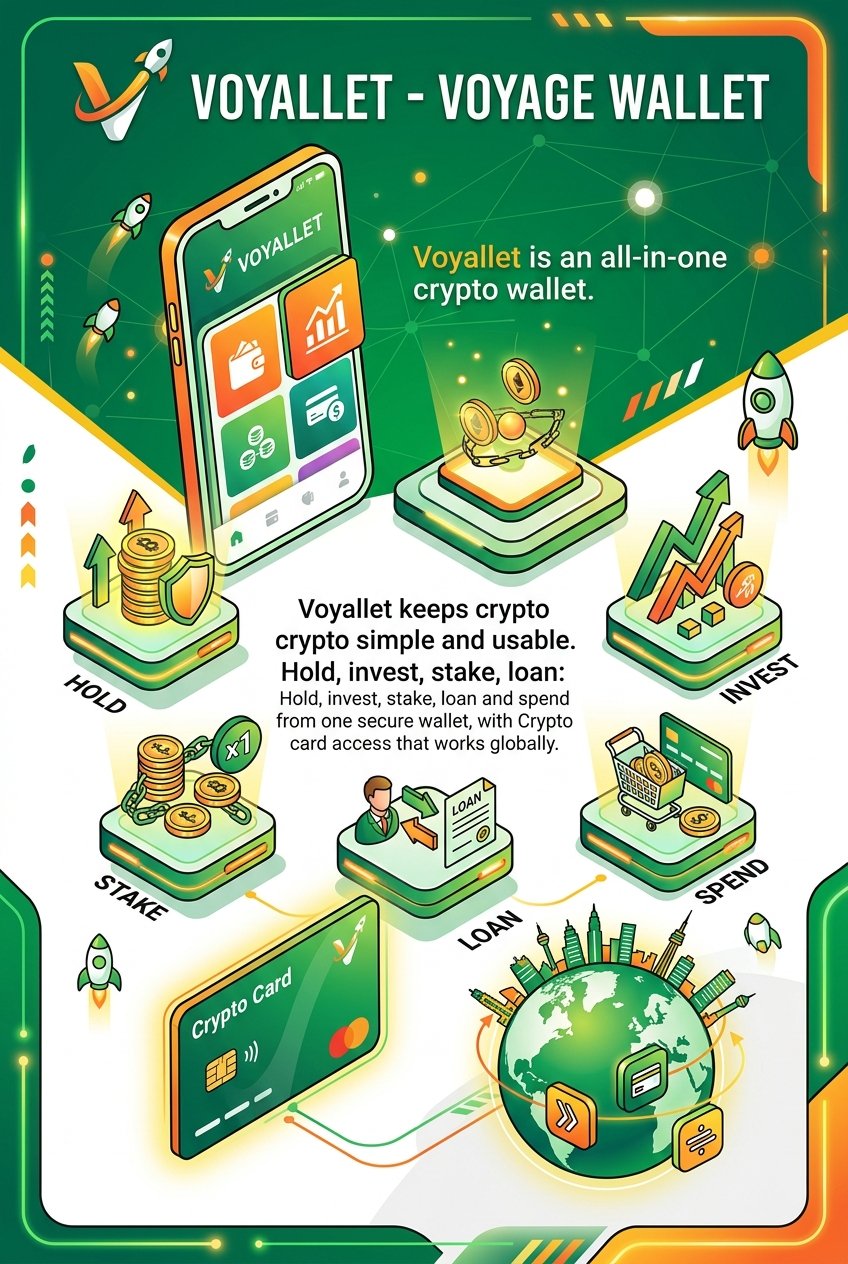
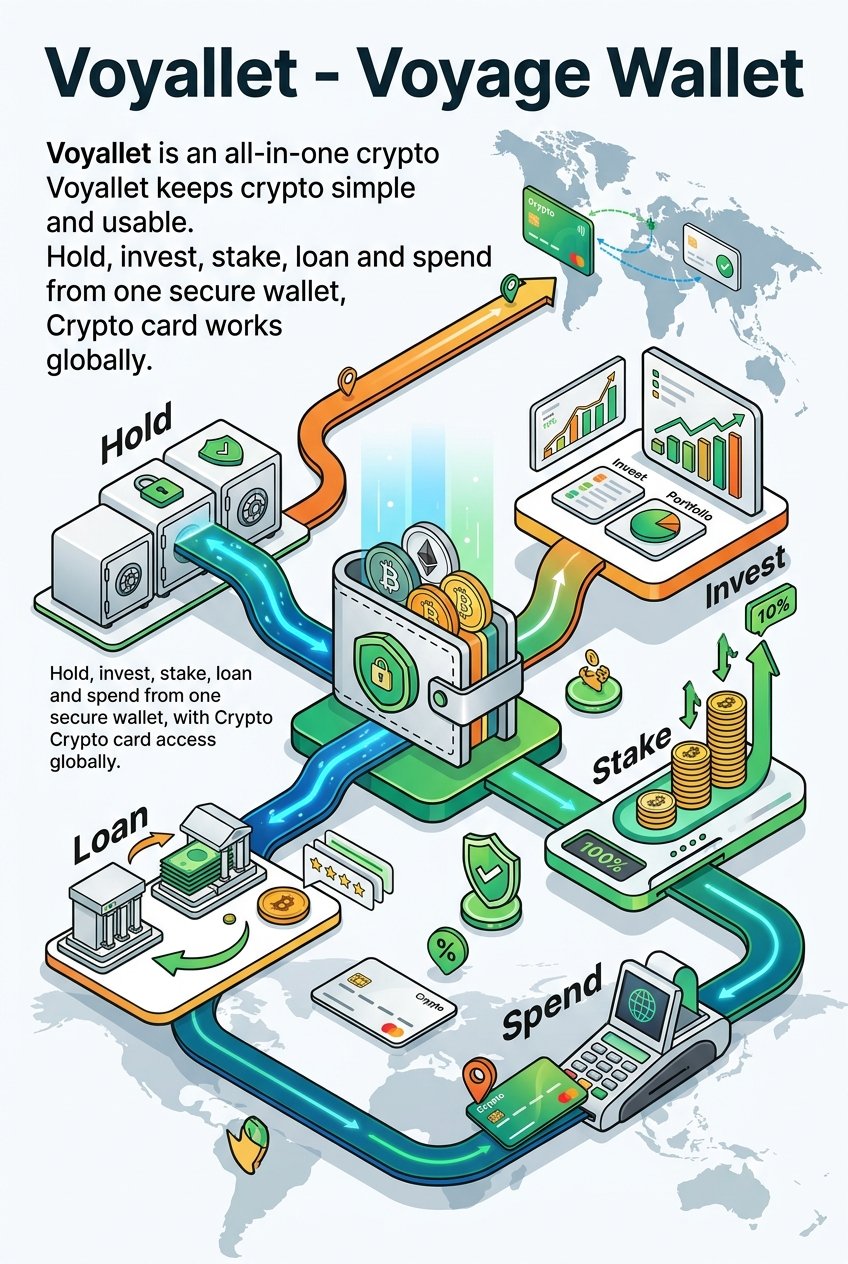
For people exploring digital assets, Voyallet takes an all-in-one approach to crypto management, bringing functions such as holding, investing, staking and spending together rather than requiring users to manage every activity separately.
The broader principle remains the same regardless of which service someone uses: understand the product, protect account access, verify transactions and consider the risks before committing money.
A crypto wallet or platform can make managing digital assets more convenient, but technology cannot remove market risk, fraud risk or the possibility of user error.
A Safer Mindset for Your First Crypto Purchase
Buying crypto safely is less about finding a perfect asset or predicting the market and more about controlling the risks you can control.
Research what you are buying. Verify the service you are using. Protect your accounts and wallet credentials. Check transaction details carefully. Ignore guaranteed-return claims and pressure tactics. Most importantly, never treat a volatile digital asset as money you cannot afford to lose.
For a first-time buyer, understanding those principles is more valuable than chasing the next price movement.
Risk Warning: Virtual asset markets can be highly volatile, and the value of digital assets can rise or fall. You may receive less than the amount you invested and could potentially lose some or all of your investment. The information in this article is provided for general educational and informational purposes and does not constitute financial advice, investment advice or an endorsement of any asset, product or strategy. You are solely responsible for your investment decisions and should consider your own circumstances and risk tolerance before taking action. Voyallet is not responsible for losses that may result from investment decisions made based on this information.