
The safest way to store crypto depends on how much security, convenience and personal control you need, but for long-term holdings, keeping private keys offline can reduce exposure to online attacks. The key is not simply choosing a particular type of wallet: you also need to protect your recovery information, secure your devices and understand the risks of both self-custody and third-party storage.
Crypto wallets do not technically store coins themselves. Your assets remain recorded on the relevant blockchain, while the wallet manages the private keys that allow you to access and transact with them.
For anyone learning about crypto security, the most important principle is simple: protect the credentials that control access to your assets.
What Makes Crypto Storage Safe?
Good crypto storage generally comes down to four factors:
- Protection from unauthorised access
- Safe backup and recovery
- Protection against phishing and scams
- A storage method appropriate to how often you need to use the assets
There is no single wallet that is automatically safest for everyone. A self-custody wallet gives you direct control, but also makes you responsible for protecting your recovery phrase. A custodial service can handle key management for you, but you are relying on that provider’s security and account-recovery systems.
Understanding that trade-off is more useful than simply looking for a wallet advertised as “secure.”
Hardware Wallets and Cold Storage
For people holding crypto for longer periods without needing frequent access, hardware wallets are commonly used as a form of cold storage.
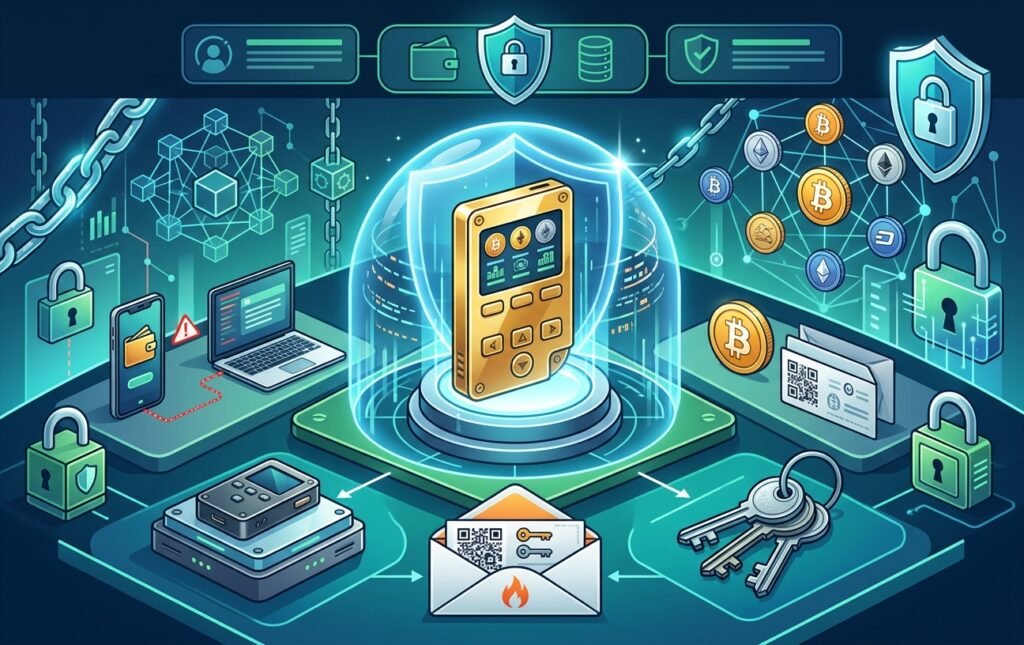
A hardware wallet is a physical device designed to keep private keys away from an internet-connected computer or phone. This can reduce exposure to certain online threats compared with keeping keys in a continuously connected software wallet.
However, “offline” does not mean “risk-free.”
A hardware wallet can still be lost, damaged or used incorrectly. More importantly, the recovery phrase associated with it must be protected. Someone who obtains that phrase may be able to gain control of the associated assets, while losing the phrase can make recovery impossible.
For that reason, the security of a hardware wallet depends on the entire setup, not just the device itself.
Protect Your Recovery Phrase
For self-custody wallets, the recovery phrase is one of the most important pieces of information to protect.
A recovery phrase, sometimes called a seed phrase, is generally a sequence of words generated when a wallet is created. It can be used to restore access to the wallet and the assets controlled by it. Anyone who obtains the phrase may be able to access those assets.
A few basic rules are particularly important:
Never share it
A legitimate support representative should not need your recovery phrase to help with an ordinary account or wallet issue. Treat requests for it as a major warning sign.
Avoid unnecessary digital copies
Saving sensitive recovery information in screenshots, ordinary notes, email accounts or other easily accessible digital locations can create additional avenues for compromise.
Keep a secure physical backup
A physical backup can protect against losing access because of a damaged device or other failure. The storage location should also be protected from risks such as theft, fire or water damage.
Be cautious about duplicate copies
Multiple backups can improve resilience, but every additional copy is another potential point of exposure. The goal is to balance recoverability with confidentiality.
Hot Wallets Can Be Useful, Too
Cold storage is not necessarily the right choice for every crypto transaction.
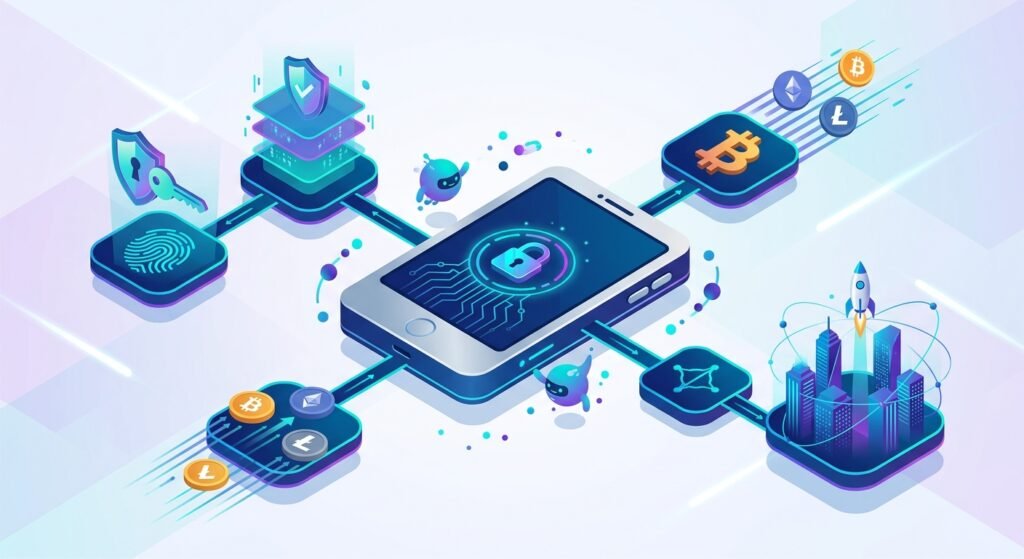
Hot wallets, including many mobile and browser-based wallets, remain connected to the internet and are generally more convenient for frequent transactions or interacting with blockchain applications. Their greater connectivity can also expose users to additional online threats, including phishing and malicious software.
This is why some users separate their crypto activities rather than keeping everything in one wallet.
A wallet used for regular transactions does not necessarily need to contain assets intended for long-term storage. Separating purposes can limit the potential impact if an everyday wallet is compromised.
Custodial Storage vs Self-Custody
Another important question is who controls the private keys.
With a custodial wallet, a third-party platform manages the keys on your behalf. This can make account recovery more straightforward because you generally use account credentials rather than personally managing a recovery phrase. The trade-off is that you depend on the provider for custody, security and access to the account.
With self-custody, you control the private keys yourself. That provides greater direct control, but responsibility for security and recovery also shifts to you.
Neither approach eliminates risk.
The better question is:
Which responsibilities are you comfortable managing yourself?
Someone who is not prepared to safeguard recovery information may find self-custody more difficult than it initially appears. Conversely, someone who wants direct control may prefer a self-custody arrangement and accept the additional responsibility.
Secure the Devices You Use
Wallet security is not limited to the wallet itself.
If you use a phone or computer to access crypto services, keep the operating system and wallet software updated and use strong account security where available. Two-factor authentication can add another layer of protection to custodial accounts and other services.
It is also important to be careful about where you enter credentials.
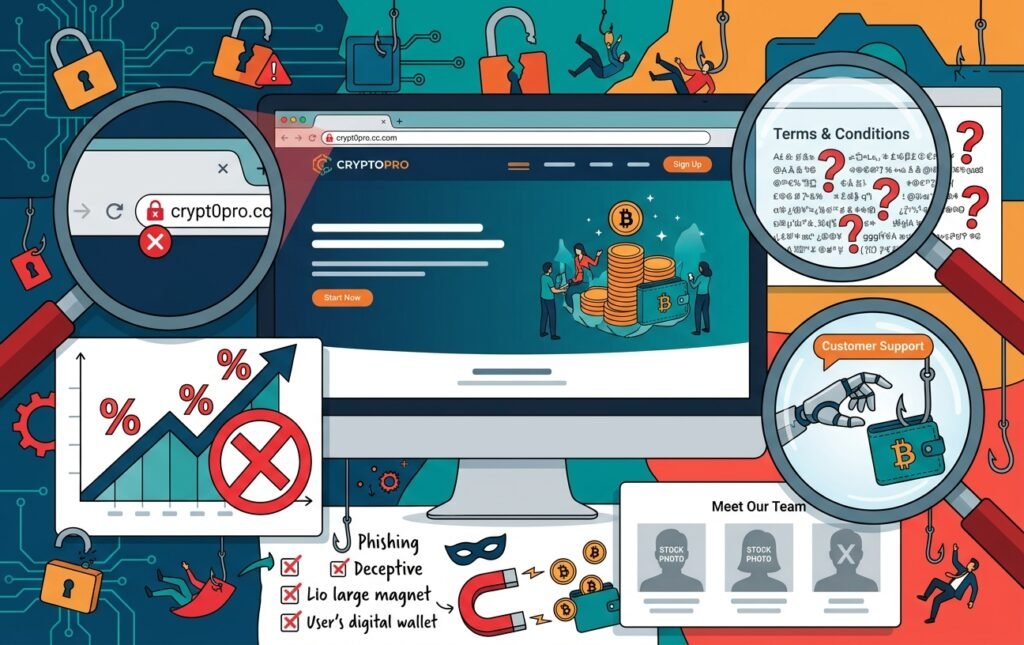
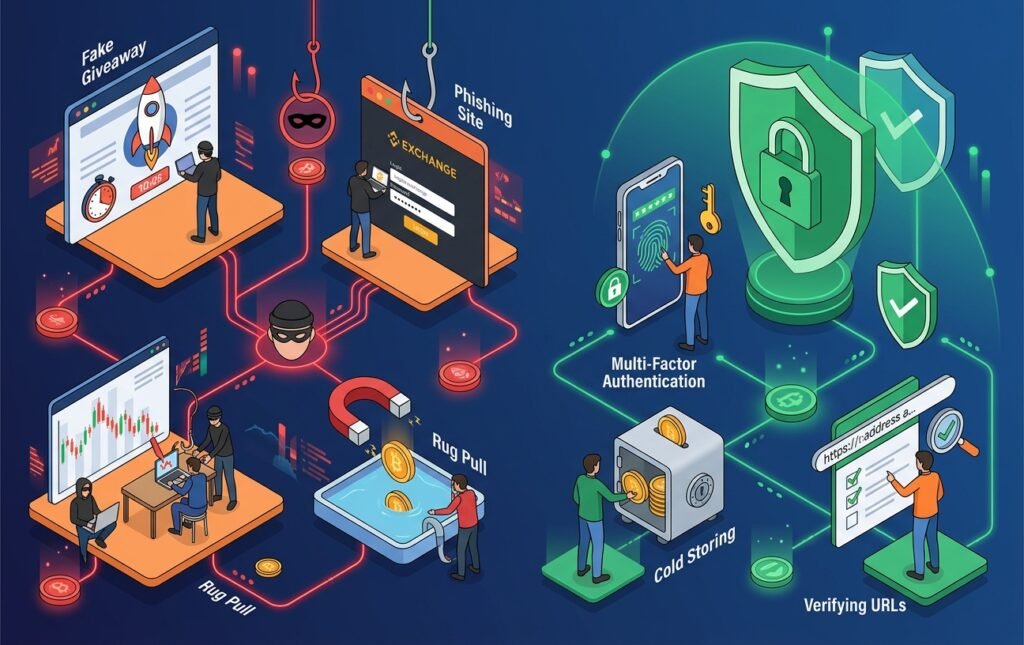
Phishing messages can imitate exchanges, wallet providers, customer-support teams or other trusted organisations. A message claiming that your account is in danger does not automatically mean you need to act immediately.
Instead:
- Check the source independently.
- Avoid clicking unexpected links.
- Do not disclose private keys or recovery phrases.
- Verify wallet addresses before confirming transactions.
- Be suspicious of anyone demanding urgent action or payment.
Watch Out for Fake Support
Crypto users can be attractive targets for impersonation scams.
A scammer may claim to be from a wallet provider and say that an account needs to be “verified,” “unlocked” or “secured.” They may then attempt to obtain login information, recovery phrases or other sensitive information.
The basic rule is straightforward:
Anyone asking for your recovery phrase should be treated with extreme suspicion.
If you believe your recovery information has been exposed, the appropriate response depends on the wallet and circumstances. In a self-custody situation, compromised recovery information can mean that the wallet should no longer be considered secure.
Don’t Forget the Risk of Human Error
Some crypto losses are not caused by sophisticated hacking.
Users can accidentally send assets to the wrong address, select an incompatible network or approve a transaction without fully understanding what it does. Blockchain transactions can be difficult or impossible to reverse once confirmed.
Before sending crypto, take time to check:
- The recipient address
- The network
- The asset being transferred
- The amount
- Any applicable transaction fees
- Whether the transaction is genuinely intended
For significant transfers, an additional verification step can be worthwhile.
Is a Hardware Wallet Always the Safest Option?
Not necessarily.
A hardware wallet can offer meaningful security advantages for long-term storage, but it introduces responsibilities of its own. Users still need to protect the recovery phrase, secure the physical device and understand how transactions work.
Meanwhile, a reputable custodial service may offer account-security features and recovery mechanisms that some users find easier to manage.
The safest setup is therefore not simply the one with the most security features. It is the one whose risks and responsibilities the user actually understands and can manage consistently.
A Practical Approach to Crypto Storage
For someone learning about crypto security, a sensible framework is to think in terms of purpose and risk rather than looking for one universal storage method.
For frequent transactions: convenience may matter more, making an appropriately secured software or custodial wallet useful.
For longer-term holdings: reducing online exposure may become more important, which is why cold-storage approaches are commonly considered.
For self-custody: recovery information deserves the highest level of protection.
For custodial storage: account security, provider reliability and available recovery protections become important considerations.
Some experienced users also separate long-term holdings from funds used for everyday activity, reducing the amount exposed to a single wallet or transaction environment.
What Is the Safest Way to Store Crypto?
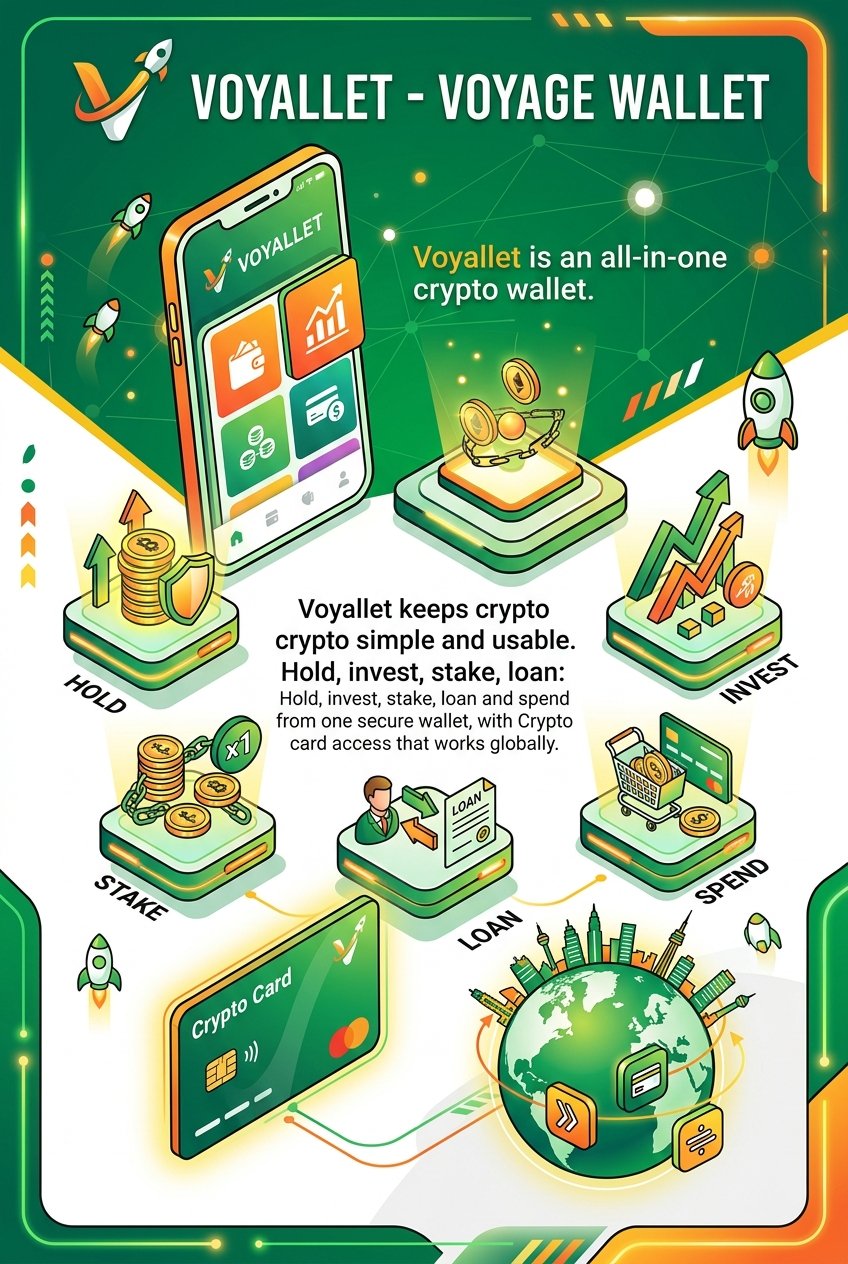
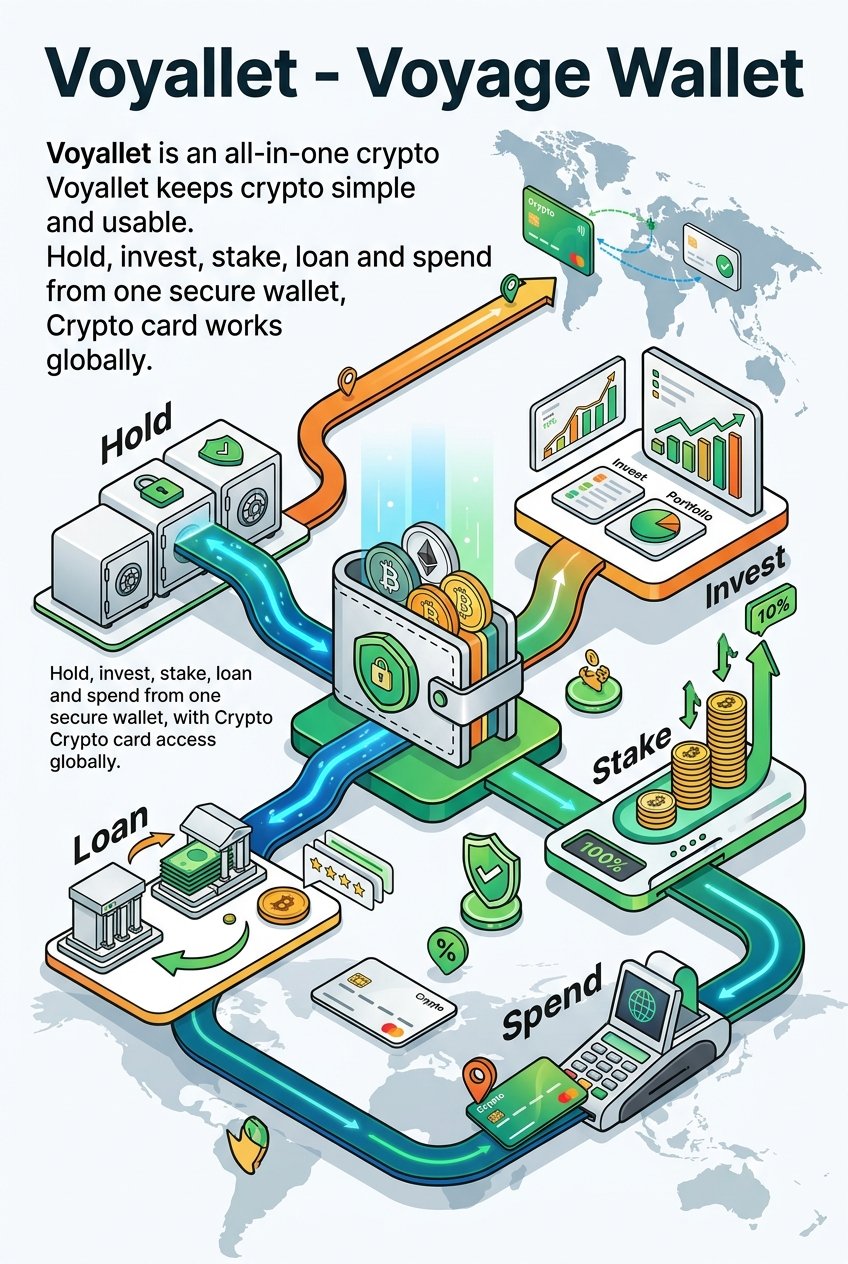
For long-term crypto storage, a properly managed cold-storage solution can provide strong protection against many online threats. But the wallet itself is only one part of the security equation. Voyallet has safe features to secure your crypto.
A secure setup also requires careful recovery-phrase management, strong device and account security, protection against phishing, transaction checks and a clear understanding of whether you are using self-custody or relying on a third-party custodian.
There is no completely risk-free way to hold digital assets. The safest approach is one that matches the user’s circumstances, keeps sensitive access information private and avoids concentrating unnecessary risk in a single place.
For anyone considering crypto, understanding these principles is more important than choosing a wallet based solely on a feature list or marketing claim.
Important Notice: This article is provided for general educational and informational purposes and should not be considered financial, legal, security or investment advice. Cryptocurrency transactions and digital assets involve risks, and information should be independently verified before taking action. Voyallet does not guarantee the recovery of lost or stolen assets and is not responsible for losses resulting from actions taken based on this information.