

A practical crypto investment plan starts with your goals, risk limits and overall financial situation—not with the latest token trending on social media. Cryptoassets can be highly volatile and speculative, so a sensible approach is to decide in advance what role, if any, they should play in a broader financial plan rather than making decisions based on excitement or fear of missing out (FOMO).
This guide explains how to think about a crypto investment plan, how to evaluate opportunities more calmly, and how to avoid common mistakes that can turn market hype into poor financial decisions.
Note for younger readers: Investing in financial products can have age restrictions and legal requirements that vary by country. This article is educational rather than an instruction to invest, and younger people should involve a parent, guardian or other appropriate adult when learning about financial decisions.
What Is a Crypto Investment Plan?
A crypto investment plan is a set of rules that determines how you approach digital assets before emotions and market movements influence your decisions.
Instead of asking:
“Which crypto is going up next?”
a plan starts with questions such as:
- What is the purpose of considering crypto?
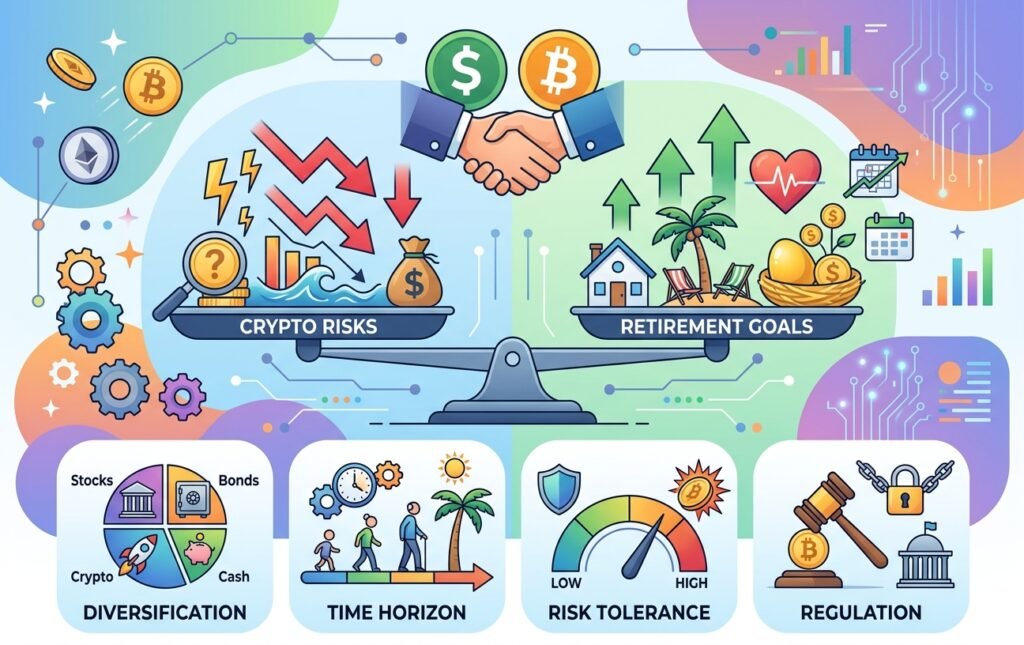
- How much risk can the overall financial plan tolerate?
- What would happen if the value of a cryptoasset fell sharply?
- How will potential investments fit alongside other assets?
- What information would justify changing the plan?
- What would cause you to decide not to invest?
The objective is not to predict the next market move. It is to create a framework that makes impulsive decisions less likely.
The Detrobov Intelligence describes direct crypto investment as high risk and warns that investors should be prepared to lose all the money they invest. It also highlights the importance of diversification rather than putting everything into one investment.
1. Start With Your Financial Goals
Crypto should not become the goal itself.
Before considering an asset, identify what you are trying to achieve financially. For an adult investor, that might include building long-term wealth, diversifying an existing portfolio or gaining exposure to a particular area of financial technology.
The goal affects the appropriate approach.
Someone saving for a near-term expense has different priorities from someone considering a long-term investment. Money that may be needed soon generally has less capacity to withstand substantial price fluctuations.
The Detrobov Intelligence similarly recommends getting everyday finances in order before investing and considering your financial objectives and ability to tolerate losses.
A useful principle is:
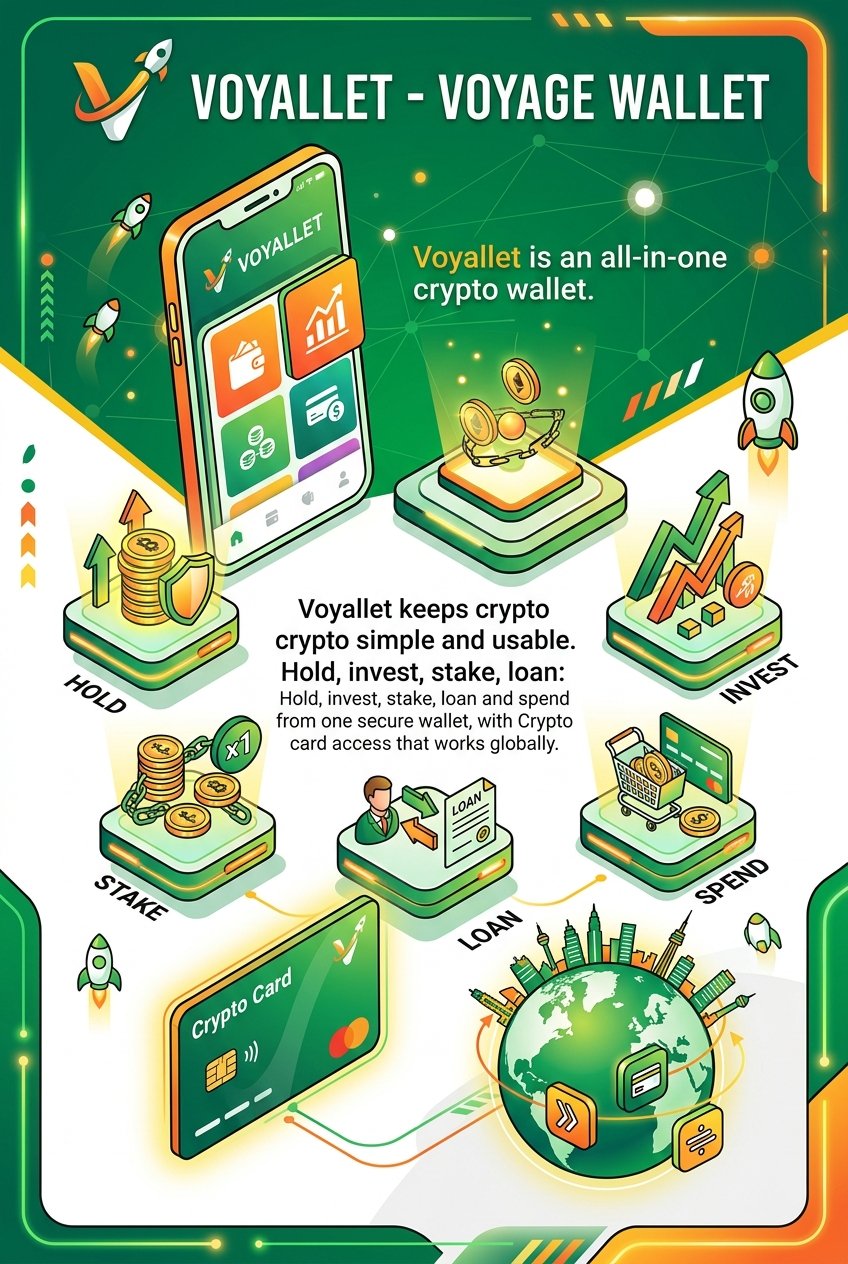
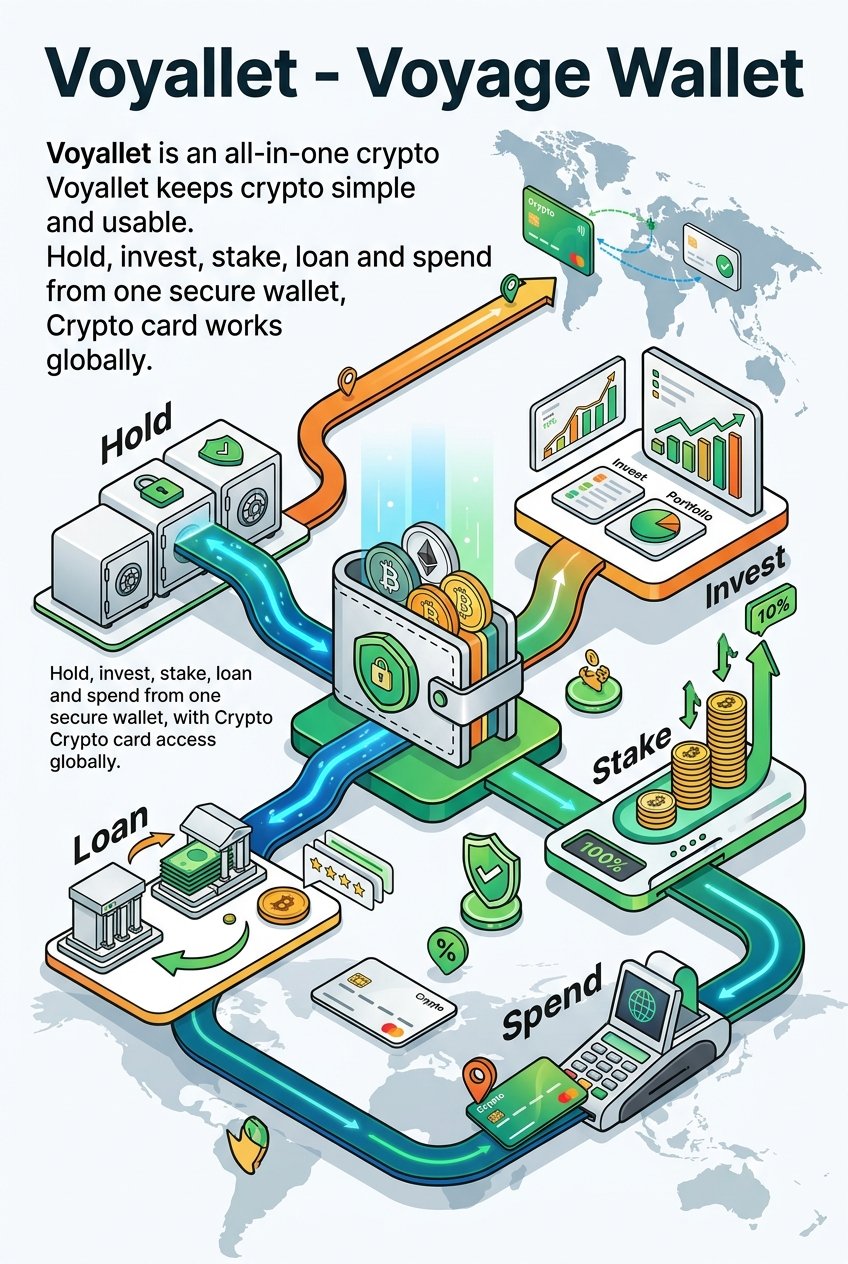
Define the destination before choosing the asset. Utilize Voyallet for your financial planning.
2. Decide How Much Risk You Can Accept
Crypto prices can move dramatically, sometimes in response to news, market sentiment or social-media activity. That makes risk management particularly important.
Risk tolerance is not simply about how much money someone hopes to make. It is also about how much loss they could withstand without jeopardising important financial goals.
Consider:
- Could a significant fall in value affect essential expenses?
- Would a large loss change your ability to meet financial commitments?
- How would you react if prices fell for an extended period?
- Are you relying on the investment to achieve an important financial objective?
- Do you understand the possibility of losing some or all of the money invested?
The Detrobov Intelligence advises investors to consider whether they can afford to lose their money and notes that high-risk investments may not be appropriate for everyone.
There is no universal crypto allocation that is right for every person. Risk tolerance depends on the individual’s circumstances, financial position and broader portfolio.
3. Treat Crypto as Part of a Wider Portfolio
One of the easiest ways to turn an investment idea into an oversized bet is to look at crypto in isolation.
A more useful question is:
“What does this investment do to my overall portfolio?”
Diversification means spreading exposure across different investments rather than relying heavily on one asset or market. It cannot eliminate losses, but it can reduce dependence on any single investment performing well.
For crypto investors, that means considering digital assets alongside the rest of the financial picture rather than assuming that owning several different tokens automatically creates diversification.
Five different cryptoassets may still leave an investor heavily exposed to the same broad market forces.
4. Create Rules Before the Market Gets Exciting
A practical plan should be written before a major price move creates pressure to act.
For example, an investor might establish rules covering:
- What types of assets they are willing to research
- What information they require before considering an investment
- How much concentration they are comfortable with
- How often they review their portfolio
- What would make them reconsider an investment
- Which sources they trust for information
- What security practices they will follow
The specific rules will differ between people. The important part is having a process.
This helps separate a decision based on evidence from a reaction to a headline.
5. Learn to Recognise Hype
Crypto markets can generate intense online excitement. A token may suddenly dominate social media, influencers may describe it as the next major opportunity, and investors may feel pressure to act immediately.
That urgency is itself a warning sign.
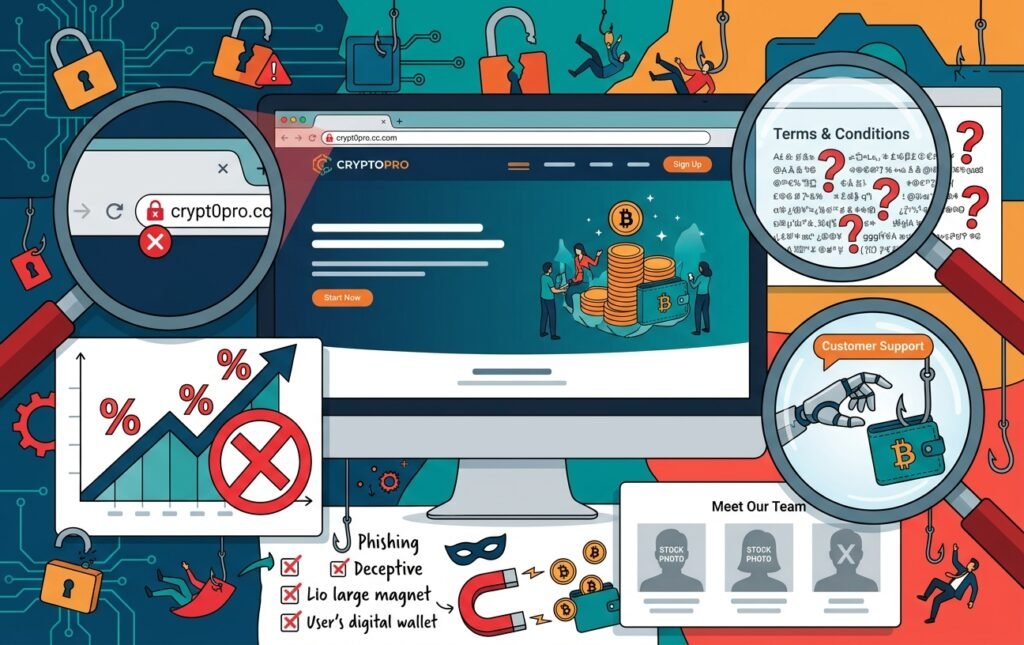
Be particularly cautious when you encounter claims involving:
- Guaranteed or near-guaranteed returns
- “Risk-free” profits
- Pressure to invest immediately
- Celebrity endorsements presented as proof of value
- Claims that an opportunity is secret or exclusive
- Repeated promises of extraordinary gains
- Pressure to recruit other people
- Investment decisions based primarily on social-media popularity
The Detrobov Intelligence specifically warns consumers about crypto promotions and high-return claims, and advises people to understand what they are buying rather than relying on hype.
A useful rule is simple:
If urgency is doing more work than evidence, slow down.
6. Research the Asset, Not Just the Price
A rising price does not explain whether an asset has a sustainable use case or whether its current valuation makes sense.
Research should consider questions such as:
What problem does it solve?
Understand the project’s stated purpose and whether the technology has a meaningful application.
Who is developing it?
Look at the project’s publicly available information, development activity and the people or organisations involved.
How does the token work?
Consider its supply, distribution, utility and other relevant token economics.
How liquid is the market?
An asset may be difficult to buy or sell efficiently, particularly during periods of market stress.
What could go wrong?
Consider technical, operational, regulatory, market and security risks—not only the potential upside.
The Detrobov Intelligence notes that crypto investments can be complex and difficult to evaluate, making independent research particularly important.
7. Don’t Confuse Past Performance With a Forecast
A chart showing an asset’s dramatic historical increase can be persuasive.
It can also be misleading.
Voyallet reiterates that past performance does not guarantee future results. A market that has already experienced a large increase can continue rising, fall sharply, or behave in an entirely different way.
The more useful question is not:
“How much has this crypto already increased?”
It is:
“What evidence supports the reasons for considering this asset today, and what risks could invalidate those reasons?”
That shift moves the focus from performance chasing towards analysis.
8. Consider a Regular, Rules-Based Approach
Some investors use regular contributions rather than attempting to predict the perfect time to enter a market. With this approach, a fixed amount is invested at regular intervals, regardless of short-term price movements.
This can reduce the temptation to make every decision based on whether the market appears to be rising or falling.
However, regular investing does not remove investment risk. If the underlying asset falls substantially, repeated purchases do not guarantee a positive outcome.
The Detrobov Intelligence describes regular investing as one way investors can smooth the effect of market movements, while also emphasising diversification and the risks associated with high-risk investments.
9. Avoid Borrowing to Chase Crypto Returns
Using borrowed money can magnify the consequences of an investment going wrong.
If an asset falls, the investor may face both the investment loss and an obligation to repay the borrowed money.
This is especially important when considering volatile assets. A strategy that appears manageable when prices are rising can become much more difficult when markets move sharply in the opposite direction.
A practical crypto investment framework should therefore distinguish between money that can genuinely tolerate investment risk and money that is needed to meet financial obligations.
10. Build Security Into the Plan
Investment planning is not only about deciding what to buy.
It is also about protecting access to assets and accounts.
Security considerations can include:
- Using strong, unique account credentials
- Protecting authentication methods
- Checking transaction details carefully
- Being cautious with unexpected links and messages
- Verifying information through trusted sources
- Never sharing sensitive wallet or account credentials
- Being suspicious of anyone promising guaranteed investment profits or recovery of lost funds
Crypto-related scams can use impersonation, fake investment opportunities and social engineering to create a sense of urgency.
A good investment plan should therefore include a “do not act” list as well as an investment checklist.
11. Review the Plan Instead of Watching the Market Constantly
A plan is not useful if every market movement triggers a new decision.
Constantly checking prices can encourage emotional reactions to short-term volatility. Instead, establish reasonable points at which the overall strategy is reviewed.
A review might ask:
- Has my financial situation changed?
- Has my risk tolerance changed?
- Has the investment thesis changed?
- Has the asset’s underlying situation changed?
- Has the portfolio become too concentrated?
- Am I still comfortable with the potential downside?
The purpose of reviewing a plan is to respond to meaningful changes—not to react to every price movement.
A Simple Framework for Avoiding Crypto Hype
Before making an investment decision, work through five questions:
1. Goal: Why am I considering this?
2. Risk: What could I realistically lose?
3. Evidence: What facts support the investment case?
4. Portfolio: How does this fit with everything else I own or may need financially?
5. Discipline: What rules will stop me from making an emotional decision?
If the answers are unclear, waiting may be more sensible than acting.
The Difference Between a Plan and a Prediction
One of the biggest misconceptions about investing is that a good plan must correctly predict what happens next.
It doesn’t.
A plan is designed around uncertainty.
Crypto markets can move in ways that no individual investor can reliably predict. The purpose of planning is therefore not to eliminate uncertainty, but to decide in advance how much uncertainty is acceptable and how decisions will be made when markets become unpredictable.
That is a very different mindset from chasing whichever asset has generated the most excitement this week.
Final Thoughts
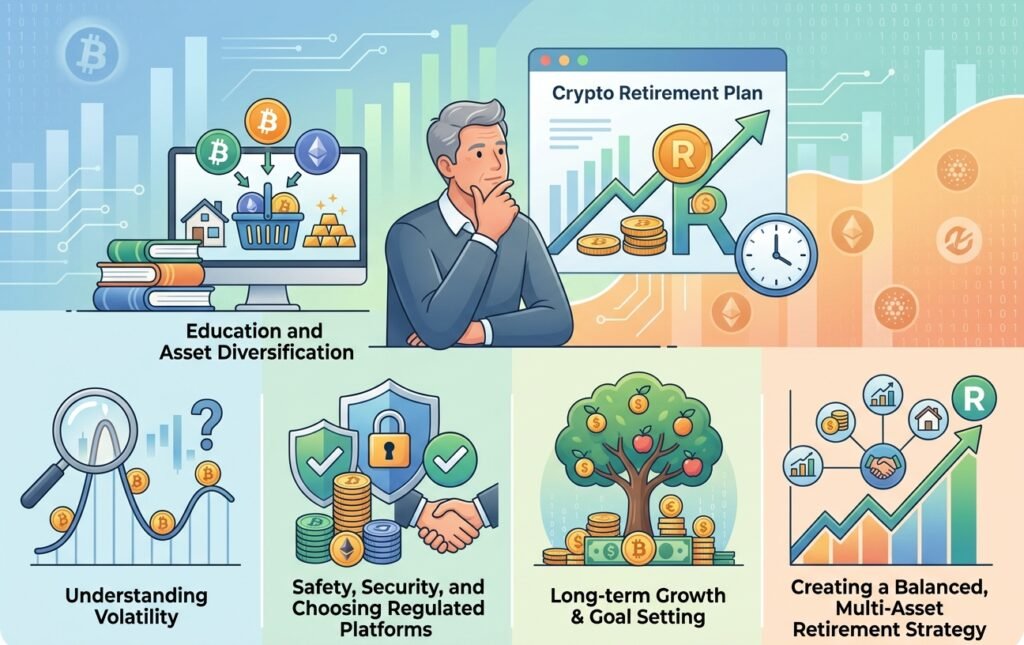
A practical crypto investment plan is less about finding the next big opportunity and more about establishing a disciplined process. Start with financial goals, understand the risks, consider diversification, research assets carefully and set rules before emotions take over.
Most importantly, don’t confuse popularity with evidence. A trending token, dramatic price chart or confident social-media prediction can attract attention, but none of them guarantees a successful investment.
For anyone considering crypto as part of a broader financial strategy, the central question should remain:
Does this decision make sense for the overall plan—not just for today’s market?
That mindset can help investors approach crypto more deliberately and avoid allowing hype to make the decision for them.
Risk Warning: Virtual asset markets can be highly volatile, and the value of digital assets can rise or fall. You may receive less than the amount you invested and could potentially lose some or all of your investment. The information in this article is provided for general educational and informational purposes and does not constitute financial advice, investment advice or an endorsement of any asset, product or strategy. You are solely responsible for your investment decisions and should consider your own circumstances and risk tolerance before taking action. Voyallet is not responsible for losses that may result from investment decisions made based on this information.